Celebrating Diwali 2026: Interview with Dr. Suzette Singh
 Who has served as an inspiration in your life?
My primary inspiration comes from my family. Being an active, engaged wife and mother brings me immense joy, and my husband and children continually motivate me to show up as the best version of myself, both personally and professionally.
What challenges have you faced on your journey so far? How did you overcome them?
Navigating medicine as a woman of color comes with its own distinct set of systemic barriers. What kept me grounded and confident was surrounding myself with a strong, supportive network of women who lifted each other up. Today, I pay that forward by mentoring early-career women in health care, helping ensure that everyone who belongs in medicine knows there is a space held for them.
How do you celebrate Diwali with your family or community?
Growing up in an Indo-Guyanese home, Diwali was always one of the most vibrant times of the year. It’s a wonderful mix of tradition, reflection, and togetherness. We start by cleaning and preparing the house, lighting rows of diyas (clay lamps) to welcome warmth and light, and sharing classic Indo-Caribbean sweets like mithai, kurma, and barfi. Now as a parent, passing these traditions down to my children gives the holiday an even deeper meaning. It's a privilege to share our heritage, values, and community spirit with them.
Can you share a bit about the religious or spiritual significance of Diwali? Why is it important to celebrate?
At its heart, Diwali, the Festival of Lights, symbolizes the victory of light over darkness, good over evil, and knowledge over ignorance. Spiritually, it’s a time to pause, reconnect with our inner values, and recommit to empathy, integrity, and hope. In a fast-paced, high-intensity field like anesthesiology, Diwali provides a grounding moment to practice gratitude and remember the purpose behind everything we do.
Tell us about some of your research, education, or advocacy initiatives.
My work sits at the intersection of clinical care, perioperative innovation, and medical education. At Lenox Hill, I’ve led efforts to establish standardized, opioid-sparing regional anesthesia pathways that accelerate recovery and improve safety for ambulatory orthopedic patients.
Additionally, as an EPIC physician educator and clinical champion, I work on EHR optimization and quality improvement initiatives to smooth out clinical workflows and elevate patient care. Beyond clinical systems, mentorship is a huge focus of mine; I am dedicated to guiding trainees, especially women and underrepresented minorities, as they build their careers in regional anesthesiology and acute pain medicine.
Why is diversity and inclusion important in medicine, particularly in regional anesthesia and pain medicine?
Diversity directly influences how patients experience care, trust their care team, and ultimately recover. Pain is deeply personal and influenced by cultural, social, and individual context. Having a diverse team in regional anesthesia and acute pain medicine allows us to deliver care with genuine empathy and cultural awareness.
Beyond patient care, inclusive leadership drives innovation, expands our collective perspective, and ensures our field truly reflects the communities we serve.
What career accomplishment makes you most proud?
I am most proud of my work as lead regional anesthesiologist for the Hand Surgery Team at Lenox Hill, where we helped earn our designation as a Center of Excellence in Hand Surgery. Developing multimodal, low-pain, opioid-sparing protocols that directly improve our patients' recovery experiences has been extremely rewarding. On a personal level, being nominated by my colleagues for awards like the Northwell Health Truly Award, LifeSaver Award, Rising Star Anesthesiologist, and Woman Who Inspires Women remains a humbling validation of advocating fiercely for our patients.
What advice would you give to young physicians as they navigate their careers?
First, invest in your support system. Surround yourself with mentors, advocates, and peers who encourage your growth, support you through hurdles, and speak up for you when you aren't in the room. Second, stay true to who you are. Your background, culture, and lived experiences are unique strengths. Finally, remember that career achievement and personal fulfillment can coexist; make space for the things that bring you happiness outside the walls of the operating room.
Is there anything else you would like to note?
I want to express my gratitude to the ASRA Pain Medicine Diversity SIG for creating opportunities to highlight diverse voices and celebrate our cultures within anesthesiology.
Representation matters immensely. Seeing our shared heritage recognized by a national organization empowers the next generation of physicians to lead with confidence, cultural pride, and compassion.
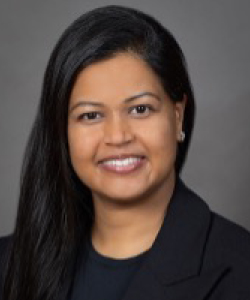
Dr. Suzette Singh is an anesthesiologist and the lead regional anesthesiologist for the Hand Surgery Team at Lenox Hill Hospital and the Manhattan Eye, Ear & Throat Hospital (MEETH) in New York, NY. She completed her regional anesthesiology and acute pain medicine fellowship at NYU Langone Health. At Lenox Hill, she helped establish and maintain recognition as a Center of Excellence in Hand Surgery. She specializes in perioperative innovation, medical education, and opioid-sparing regional anesthesia pathways designed to enhance postoperative recovery and patient safety in ambulatory orthopedics.
In addition to her clinical leadership, Dr. Singh serves as an EPIC physician educator and clinical champion, spearheading electronic health record (EHR) optimization and quality improvement initiatives across Northwell Health. Her commitment to mentorship focuses on empowering women and underrepresented minorities in regional anesthesiology and acute pain medicine. Recognizing her leadership, clinical excellence, and patient advocacy, her peers have nominated her for the Northwell Health Truly Award, the LifeSaver Award, Rising Star Anesthesiologist, and Woman Who Inspires Women.