Celebrating Black History Month 2026
Every February, the United States honors the contributions, sacrifices, and accomplishments of Black Americans who have helped shape the nation.
Black History Month was founded by Carter G. Woodson in 1926. He established the observance, choosing February to coincide with the birthdays of Abraham Lincoln and Frederick Douglass.
In 1976, President Gerald Ford officially recognized Black History Month in a speech, challenging Americans to “seize the opportunity to honor too-often neglected accomplishments of Black Americans in every area of endeavor throughout history.” Congress passed the “National Black History Month” into law in 1986.
In recognition of Black History Month 2026, the Diversity SIG is highlighting leaders who exemplify excellence and promote equity and inclusion in their medical practices, while sharing the perspectives and challenges faced by Black Americans in medicine.
Interview with John Wesley Patton, III, MD, MBA
Interview with Karla Wyatt-Thompson, MD, MS, FAAP
Representation as a Clinical Tool in Perioperative Care by Nicole Ampatey, MD
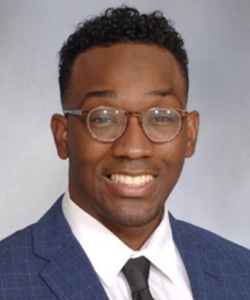
The Weight and Honor of the White Coat by Austin Thompson, MD
Interview with John Wesley Patton, III, MD, MBA
“It’s important to recognize and honor those who paved the way. Their stories matter, their resilience matters, and remembering them ensures that their contributions are never forgotten.”
Can you tell us your name, where you work, and your current leadership roles at your home institution and in other societies?
My name is Dr. John Wesley Patton, III. I am a board-certified anesthesiologist specializing in regional anesthesia and acute pain medicine. I serve as an assistant professor in the Department of Anesthesiology and Perioperative Medicine at the University of California, Los Angeles (UCLA). I am the director of Regional Anesthesia at Ronald Reagan UCLA Medical Center and am a member of our department’s Acute Pain faculty. I am also a member of the Global Health Equity faculty within our department.
In addition, I serve on several departmental committees, including the Financial Feedback Committee and the Billing Optimization Workgroup. On a national and state level, I am involved with the California Society of Anesthesiologists, the American Society of Anesthesiologists, and ASRA Pain Medicine, where I contribute to various committees and interest groups.
Who has served as an inspiration in your life?
A major inspiration in my life has been my grandfather, Dr. Joshua Smith. He immigrated from Trinidad to the United States with very little and went on to attend medical school at Loma Linda University. He became a general surgeon and practiced in Texas at a time when African Americans faced significant barriers, not only in becoming physicians but also in everyday life.
He was the definition of a servant leader. He would work extra shifts so his partners could spend time with their families. He practiced in underserved communities performing a wide range of procedures, from delivering babies to removing gallbladders. I have vivid memories of my mom calling him whenever we were sick. I would sit nearby with a medical encyclopedia open, listening to him explain things over the phone, and it always felt like he was reading directly from the page. He was incredibly humble and brilliant. His influence played a major role in inspiring me to pursue medicine.
What challenges have you faced on your journey as a physician and anesthesiologist? How did you overcome them?
I struggled in the early years in college. I had done very well in grade school and was essentially a straight-A student, but when I got to college, I faced adversity, largely due to immaturity and a lack of understanding of what it would take to succeed at that level.
There was a time in which I questioned whether medicine was the right choice for me. I even considered switching to the business side of healthcare or exploring a different field. However, what helped me get back on track was prayer, encouragement from my family, and mentors who guided me to refocus and gain clarity.
After graduating, I worked as a medical assistant for a medical group, and that experience reignited my passion for medicine. Being involved in patient care again reminded me why I wanted to become a physician in the first place. That became the turning point. I reached out to people who could help guide me, and step by step, I found my way forward.
How do you celebrate Black History Month? Why is it important?
I celebrate Black History Month by honoring and remembering those who came before me. Many individuals made significant sacrifices that allow me the opportunity to wear a white coat. I don’t take that responsibility lightly, nor do I take it for granted. It’s important to recognize and honor those who paved the way. Their stories matter, their resilience matters, and remembering them ensures that their contributions are never forgotten.
Can you tell us about your research, education, or advocacy initiatives related to diversity, equity, or healthcare disparities?
I serve as a Global Health Equity faculty member within our department, where I lecture residents through this pathway to help them better understand challenges related to diversity, equity, and inclusion—particularly within anesthesia and perioperative medicine.
I’ve also had opportunities to collaborate on research efforts with leaders in the health equity space, including Dr. Adam Milam at Johns Hopkins University. I also serve on the American Society of Anesthesiologists Committee on Professional Diversity, as well as the California Society of Anesthesiologists.
This work is important to me because it allows us to identify disparities, educate future physicians, and work toward meaningful solutions.
Why is diversity and equity important in medicine, and specifically in regional anesthesia and pain medicine?
Inclusive excellence is essential in medicine because it helps ensure that we are truly serving all communities—especially those that have been historically marginalized.
Equitable representation within the physician workforce is crucial, and cultural competence matters. There is strong evidence that diverse organizations perform better in terms of outcomes and financially. Beyond performance metrics, this is about trust. Many communities carry mistrust toward the healthcare system due to historical and lived experiences.
Having physicians who understand these realities and can communicate effectively across cultures is vital in meeting patients where they are. In regional anesthesia and pain medicine, where communication and trust are central to patient care, that understanding is especially important. Our ultimate goal is to provide equitable care for all.
What career accomplishment makes you most proud?
The accomplishment I am most proud of is being able to say that I am a doctor.
When I was in college, a counselor informed me that my chances of becoming a physician were slim because of my early academic struggles. In that moment, I felt more like a statistic than someone with potential.
Fortunately, I had family and mentors who believed in me and encouraged me to keep going. Matriculating into medical school, graduating, and becoming a physician was deeply meaningful, not just professionally, but personally. It was proof that setbacks don’t define who you are.
What advice would you give to young physicians as they navigate their careers?
Don’t let anyone—or anything—tell you that you can’t achieve your dreams. You will face adversity—we all do. But adversity builds character and resilience. If you truly want to become a physician, it is possible. Be willing to work hard, and be honest when you need help. Don’t hesitate to ask for it.
No one achieves success alone. Find mentors and build your community. Surround yourself with people who believe in you and who will encourage you to reach your full potential.
Is there anything else you would like to note?
Representation matters. When young students see physicians who look like them, share similar backgrounds, or have overcome comparable obstacles, it broadens their perception of what is possible. If my journey can encourage even one person to keep going, then I’m grateful for the chance to share it.
I also want to sincerely thank the Diversity Special Interest Group for the opportunity to share my story and for highlighting our voices during Black History Month. I’m honored to be included in this feature.
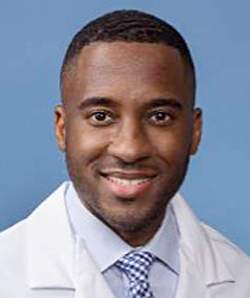
John W. Patton, III, MD, MBA, is an assistant professor in the Department of Anesthesiology and Perioperative Medicine at the University of California, Los Angeles (UCLA). He also serves as the director of Regional Anesthesia at Ronald Reagan UCLA Medical Center.
Dr. Patton graduated with a dual degree (MD/MBA) from the University of California, Irvine (UC Irvine) School of Medicine, and completed his intern year at UC Irvine in preliminary medicine. He completed his anesthesia residency at Stanford followed by a regional anesthesia and acute pain medicine fellowship at Cedars-Sinai Medical Center in Los Angeles, CA.
Dr. Patton is passionate about organizational management, technology and innovation, and big data. Additionally, he is involved in mentorship and believes strongly in ensuring that one’s gifts, talents, and successes are used to help the disadvantaged and future generations recognize their full potential. In his free time, he enjoys cooking, shopping at farmer’s markets, staying active, rooting for his hometown teams (the Lakers and Dodgers), and spending time with his family.
Interview with Karla Wyatt-Thompson, MD, MS, FAAP
“Your career will have high and low moments too, but do not let the low places or the disappointments distract you from what you were destined to do.”
Can you tell us your name, where you work, and your current leadership roles at your home institution, and other societies?
I am Karla Wyatt-Thompson, MD, MS, FAAP. I work at Cincinnati Children’s Hospital Medical Center in Cincinnati, OH. I serve as the division director of post-surgical pain and regional anesthesia and the director of ambulatory acute pain.
Who has served as an inspiration in your life?
My parents, both of whom were trailblazers, graduated with PhDs from the Massachusetts Institute of Technology (the same year that astronaut Ronald McNair received his PhD). Beyond work ethic and esteem, they instilled in me an empathy for others, integrity, and hope.
What challenges have you faced on your journey so far as a physician and anesthesiologist? How did you overcome them?
The biggest challenge that I could summarize over my career has been developing the resolution that I belong and that my contributions are relevant and worthy. We all have a specific role and unique insights to bring to our respective fields. In the process of obtaining understanding and celebrating the wisdom of others, remember to affirm yourself and be strong and courageous.
How do you celebrate Black History Month? Why do you think it’s important to recognize and celebrate Black History Month?
I celebrate Black History throughout the year, specifically through education and platforms that foster mentorship and sponsorship. Locally, the National Underground Railroad Freedom Center offers programs that highlight known historical and unknown pillars within the Black and African communities. Legacy and history must be passed on through generations. I benefited from this education in childhood and recognize its importance.
Can you tell us about some of your research, education, or advocacy initiatives and particular projects that address diversity, equity, or disparities in healthcare?
I am currently investigating the role of pain protocols to reduce inequity in healthcare following major surgeries. I am also a mentor through the Morehouse School of Medicine Anesthesia Pipeline Program, which offers scholarship, research projects, mentorship, and sponsorship to medical students interested in anesthesia.
Why are diversity and equity important in medicine and in regional anesthesia and pain medicine?
There are health inequities in pediatric care. While the studies are inconsistent in how this affects perioperative care, there are outlined challenges for pediatric patients from minority groups in pain management. Furthering this area of research keeps the importance relevant and encourages opportunities to reconcile solutions that bridge inequitable gaps in care.
What career accomplishment makes you most proud?
I couldn't name a particular accomplishment, but the joy I have experienced from caring for families in their most vulnerable moments has been a perpetual source of gratitude.
What advice would you give to young physicians as they navigate their careers?
Do what you are passionate about and hold on to what was given to you. Your career will have high and low moments too, but do not let the low places or the disappointments distract you from what you were destined to do. This practice has sustained me throughout the ebbs and flows of medicine.

Karla Wyatt-Thompson, MD, MS, FAAP, is a pediatric anesthesiologist and pain specialist with a focus on regional and acute pain medicine innovation, multidisciplinary care, and evidence-based education. Her clinical work centers on developing personalized pain plans that incorporate a range of modalities, from oral and parenteral medications to regional anesthesia, psychotherapy, physical therapy, and interventional procedures.
Representation as a Clinical Tool in Perioperative Care
By Nicole Ampatey, MD
As a third-year anesthesiology resident practicing in a diverse metropolis, I am aware that medicine does not exist in a vacuum. The preoperative area, operating room, and post-anesthesia care unit are shaped by the same historical and structural inequities that influence patients’ lives long before they arrive for surgery. As a Black physician, my presence in these spaces is profoundly meaningful—not only to me, but to the patients I serve. Black History Month invites us to reflect on the progress medicine has made, while acknowledging the work that remains.
Historically, Black people were systematically excluded from the medical profession, resulting in a profound lack of representation in these essential fields. As a graduate of a Historically Black College or University, I was fortunate to train at one of the few institutions founded to educate aspiring Black physicians and expand access to care for Black patients who had nowhere else to turn. One of my most meaningful experiences in medical school was volunteering at the New Freedmen’s Clinic, an extension of Freedmen’s Hospital—a historic institution established in 1862 during the Civil War to care for formerly enslaved individuals, particularly elderly and disabled African Americans denied medical care elsewhere.
I have seen patients’ body language shift when they recognize they are being cared for by someone who looks like them and who may better understand their concerns.
Black physicians remain underrepresented across nearly every medical specialty, including anesthesiology. This lack of representation matters because diversity in medicine is not simply about numbers—it is about perspective, trust, advocacy, and patient outcomes. For patients whose prior experiences with healthcare have involved bias or dismissal, representation can serve as a powerful bridge. I have seen patients’ body language shift when they recognize they are being cared for by someone who looks like them and who may better understand their concerns.
One memorable patient encounter was with an older Black gentleman I met in the anesthesia preoperative clinic. He sat across from me with a thick folder of paperwork and a shopping bag filled with fading prescription bottles. When I asked about his diabetes management, he admitted that he struggled to keep track of his medications and relied heavily on his daughter, who was not present. When I offered to call her so she could participate in the visit, his eyes lit up. Together, we reviewed his medication regimen, perioperative instructions, the anesthetic plan, and postoperative pain control. Weeks later, I had the privilege of caring for him intraoperatively and followed his recovery. He shared with me that by taking the time to explain his care thoroughly, involving his family, and following him through a vulnerable period, I was able to ease some of his anxiety during one of the most difficult periods of his life. Before discharge, he asked for my business card. When I asked him why he wanted one, he replied, “I want to show my grandkids what my Black anesthesiologist looks like.”
Black History Month is not just a celebration of the past; it is a call to action for the present and the future. As I reflect on my journey in medicine, I recognize that my presence is part of a larger continuum shaped by those who came before me—Black physicians who persevered despite exclusion, discrimination, and limited opportunity. Their legacy informs my responsibility to care for my patients with excellence, to advocate for equity, and to keep the door open for others to do the same.
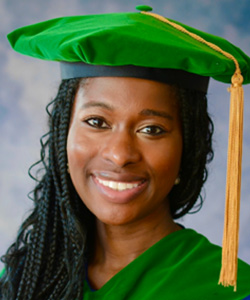
Nicole Ampatey, MD, is a CA-2 resident in anesthesiology at the University of Illinois Chicago. She has a BA, cum laude, in neuroscience from Bowdoin College and earned her medical degree from Howard University College of Medicine. Her interests include mentorship; diversity, equity, and inclusion initiatives; and research focused on health disparities. Outside the hospital, she can be found rallying on a squash or tennis court, experimenting with new recipes, or scouting for the best thrift store finds in town.
The Weight and Honor of the White Coat
By Austin Thompson, MD
The journey to becoming a physician is long and demanding, regardless of background. However, navigating this path as a Black man adds layers of complexity that are rarely acknowledged but deeply felt.
My name is Austin Thompson. I was born in Chicago, IL, and grew up in Cleveland, OH, and Atlanta, GA—cities that shaped my identity and my understanding of community, resilience, and opportunity. While many factors make this journey more difficult for Black physicians, there are also experiences that make it profoundly meaningful. During Black History Month, I reflect on my experiences as a Black man in medicine, considering both challenging and affirming realities that have accompanied them.
[M]edicine is not just about diagnosis and treatment, but about trust, connection, and the power of representation to shape both.
Some of my earliest memories of experiencing differences come from my undergraduate coursework. In large lecture halls, I often found myself one of only a few Black students in the room. That visibility brought subtle pressures, such as the sense of representing more than just myself, the difficulty of finding study groups, and the quiet isolation that can exist even in crowded spaces. For me, these challenges were softened by a strong support system outside of academics, so they did not solely define my experience. However, they cultivated an early awareness of how race can quietly shape medical training environments.
Residency, however, highlighted these dynamics even more. My experience as a Black male resident has included both challenging and revealing moments. I vividly recall patient encounters where racial remarks were made, and the care team moved on, leaving the moment unaddressed. At other times, team members intervened on my behalf. While I appreciated their well-intentioned gestures, they felt uncomfortable at times, as though I were being shielded from something fragile or unfamiliar. In reality, these experiences were not new to me. I have always been comfortable advocating for myself. These moments were real and reflect the world that I have always lived in.
Residency has shown me how professional expectations can feel varied depending on one’s identity. At times, the feedback I received felt less forgiving and more based on impressions, indicating that standards may not always be applied consistently. There were moments when it felt as though the margin for error was smaller, the benefit of the doubt harder to access, and the scrutiny more persistent. These experiences have deepened my understanding of how evaluation systems, even within well-intentioned environments, can function differently across diverse trainees.
While I have faced challenges, my training has also been filled with extremely impactful and positive experiences. Many of the most meaningful moments in my training have come from caring for patients who look like me. These encounters remind me exactly why representation in medicine matters. There is something powerful about entering a room and seeing an older Black man whose face mirrors my uncle’s or a Black woman whose warmth feels immediately familiar in a way that is hard to articulate but instantly grounding. Often, I can feel the shift as soon as I enter, a softening, a sense of ease.
These patients are often more open, more trusting, and more willing to share concerns they might otherwise withhold. They ask different questions, tell fuller stories, and speak with a level of honesty that deepens the therapeutic relationship and ultimately enhances their care. Just as meaningful is the pride I see reflected, the quiet nods, the smiles, and the sense that my presence in that room carries weight beyond the white coat. Those moments remind me that medicine is not just about diagnosis and treatment, but about trust, connection, and the power of representation to shape both.
There are days when the weight of training feels heavy, when the challenges feel unrelenting, but it is in these encounters that everything feels worth it. It is a privilege to advocate for patients who see themselves in me and to serve my community in a way that feels both deeply personal and profoundly purposeful.
As I reflect during Black History Month, I also want to speak directly to those following behind me: the undergraduates, medical students, and future physicians who may be questioning whether this path is worth the weight it carries. Stay in it. Stay through it.
The journey is complex, and at times it will feel heavy, isolating, and unfair. However, it is also deeply rewarding. Being able to care for our communities, overcome the barriers placed before us, and make our families and communities proud is what gives this work meaning. Our presence matters.