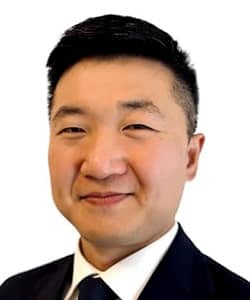
Interview with the 2026 Distinguished Service Award Recipient Dr. Oscar de Leon-Casasola
Cite as: Meng H. Interview with the 2026 distinguished service award recipient Dr. Oscar de Leon-Casasola. ASRA Pain Medicine News 2026;51. https://doi.org/10.52211/asra110126.006.

Howard Meng: You first completed a degree in music with a specialty in piano. What subsequently drew you to medicine?
Oscar de Leon-Casasola: Shortly before I completed my music degree, I received a scholarship to study piano, harmony, and composition at the Conservatorium van Amsterdam. That same year, I was accepted to medical school. My mom put her foot down and said, “You are not going to Amsterdam at this age.” I was 17 years old. She advised me to register for medical school and reconsider the scholarship in 2–3 years. It was the best advice. I never looked back.
HM: Which training experience most shaped your approach to pain care?
ODLC: My exposure to cancer patients in pain. Even today, very few centers offer this type of exposure during training. I am so glad that I had that experience.
HM: How did your early work in acute pain and critical care influence your later work in chronic pain and cancer pain?
ODLC: In the past, the path to chronic pain was through regional anesthesia and acute pain management. I quickly realized that chronic and cancer pain required different approaches and that interventional procedures alone were not going to yield the results that I had experienced in acute pain and regional anesthesia. However, the outcome and tolerance studies that I performed early in my career paved the way for dealing with chronic and cancer pain patients.
HM: How have you seen the field of pain medicine evolve over the course of your career?
ODLC: I am somewhat discouraged by the emphasis on interventional pain management training at this juncture in some fellowship programs. Some pain physicians call themselves “interventional pain physicians.” Why is that? In my humble view, we should be treating pain with non-pharmacologic, non-opioid pharmacologic, and, when needed, interventional procedures. We cannot forget multidisciplinary approaches.
Conversely, I am encouraged to see how basic science on pain pathways, receptors, and glial-neuron interactions has exploded. This work opens the field to mechanistic treatments rather than single-target approaches.
HM: What are the biggest changes you have seen in the way clinicians assess and treat cancer pain?
ODLC: To be honest, not many changes. There are practitioners still using sympathetic chain neurolytic blocks for advanced pancreatic, stomach, ovarian, urinary bladder, and uterine cancer pain when the data show that, once the tumor has spread beyond the capsule, these blocks do not work. Moreover, in my opinion, the mechanistic approach to determining the contribution of somatic, visceral, and/or neuropathic pain to the clinical picture is still underutilized.
On the positive side, adding ultrasound-guided procedures in patients with musculoskeletal pain has been a wonderful development because it allows us to be more precise when using these techniques. In neurostimulation, peripheral nerve stimulation has also been a valuable addition to our armamentarium.
HM: What do you think is the next breakthrough in cancer pain management?
ODLC: NaV1.8 blockers may play a significant role in conditions like chemotherapy-induced peripheral neuropathies, persistent postoperative pain, and other post-cancer treatment-related pain. Lars Arendt-Nielsen’s team has shown strong evidence that when patients control the source of peripheral pain, their associated central sensitization may decrease. I hope this will be the case with the aforementioned conditions.
Glial activation-mediated central sensitization has been demonstrated in these conditions. Moreover, this is an important issue, as the number of cancer survivors has increased over the last 10 years. In fact, we reported that 64% of the patients we treat in our clinic are receiving treatment because of pain related to cancer therapies.
HM: What areas of pain medicine still need further attention and advancements from clinicians and researchers?
ODLC: I think several important areas in pain medicine still need improvement. One is the development and integration of non-pharmacological and non-opioid treatments. Current guidelines for conditions such as osteoarthritis and low back pain, despite the limitations of these broad diagnostic categories, emphasize the value of multimodal approaches. Another area is understanding and targeting glial activation, which appears to play an important role in pain chronification and may offer opportunities for novel treatments. Finally, we need more effective anti-neuropathic pain medications with fewer central side effects, such as sedation, cognitive impairment, and dizziness, which can limit their use.
HM: What first brought you to ASRA Pain Medicine, and what kept you engaged over so many years?
ODLC: It was an inherited trait!! Dr. Ben Covino (RIP) brought Dr. Gerry Ostheimer (RIP) to ASRA Pain Medicine. In turn, he brought Dr. Mark Lema, who brought me to ASRA Pain Medicine.
Moreover, early in my career, I went to a Regional Anesthesia and Acute Pain meeting in Chile with Drs. Gale Thompson, Stephen Abram, and Randy Carpenter. The meeting organizers took us all to southern Chile for a fishing trip. The interactions with those society leaders convinced me of the value of working for the society and getting involved. It felt like a true family, something I still cherish. That is why, during my presidency, I tried to bring that feeling into our meetings and the celebrations at the end of them.
NaV1.8 blockers may play a significant role in conditions like chemotherapy-induced peripheral neuropathies, persistent postoperative pain, and other post-cancer treatment-related pain. Lars Arendt-Nielsen’s team has shown strong evidence that when patients control the source of peripheral pain, their associated central sensitization may decrease. I hope this will be the case with the aforementioned conditions.
HM: How did serving as president of ASRA Pain Medicine shape your view of the organization?
ODLC: Well, “shape” may not be the best word to describe it. I would say “reaffirm,” because I had been part of ASRA Pain Medicine since 1992, when I attended my first meeting in Tampa, FL.
The work that the executive committee, the board of directors, and the ASRA Pain Medicine office staff did was truly inspiring. How could you not commit all your efforts to advance an organization that is fully dedicated and offers full support from the top down to all the members?

HM: Which ASRA Pain Medicine initiatives/meetings are you most proud to have helped advance?
ODLC: There are several accomplishments that would not have gotten off the ground without the support of the board members, Angie Stengel, our executive director, and the ASRA Pain Medicine office staff:
- Membership: When I took over the society, there were 3,968 members. By the end of my presidency, we had more than 5,200 members.
- Special Interest Groups (SIGs): During my presidency, we added the ultrasonography (US), regenerative medicine, point-of-care ultrasound (POCUS), pediatric regional and pain, neuromodulation, headache, functional medicine, and NP/PA/clinical nurse SIGs. At the time, 34% of our members belonged to a SIG. We also created a pathway for these groups to contribute ideas for spring and fall meeting content.
- POCUS Workshop: I established the POCUS workshop during my presidency. It was not easy, as there was also some opposition to its creation. I must recognize Dr. Anahi Perlas for developing a plan to implement the workshop that was critical to obtaining final approval from both the board and the education committee. The February 2017 workshop sold out shortly after it launched, demonstrating demand for ASRA Pain Medicine to be involved in this type of member education.
- Practice Management Program: We created a Practice Management Program for pain management specialists in partnership with the American Society of Anesthesiologists (ASA). I must recognize Dr. David Provenzano for his leadership in developing and implementing the program. We offered these programs as satellite events during our fall meetings. Moreover, we created a Practice Management Certificate for regional anesthesiologists attending the spring 2017 meeting in San Francisco. We felt practice management was an important component of physician education, particularly for newly graduated physicians, because it provides a roadmap for establishing and managing their practices.
- Chronic Pain Ultrasound Workshop Certification: Starting with the 2017 US workshop for chronic pain, we offered certification in this area. I have to thank Dr. Samer Narouze for his leadership in getting the board to approve this initiative and for implementing a program that continued in the years to come.
- Burnout: The first indications of burnout in our specialty became apparent during my presidency. We conducted a study with other anesthesiology subspecialty societies to determine the incidence of burnout among our members. We published the results in our journal, Regional Anesthesia and Pain Medicine (RAPM). This led us to incorporate educational tools into our programs to help prevent and address burnout among affected physicians. I have to recognize Angie Stengel, our executive director, and the office staff for their support in conducting the survey among our members.
- Faculty Development: We were concerned that many training programs lacked faculty development. Thus, we created a committee within our society to help faculty become more effective teachers and to support faculty in becoming more independent researchers by building skills in basic statistics, probability theory, study design, and manuscript preparation. Dr. Brian Sites was instrumental in creating the educational activities and tools for our members.
- Advocacy: ASRA Pain Medicine led the way in collaborating with several pain and anesthesiology societies—including the ASA, North American Neuromodulation Society, Academy of Pain Medicine, and American Pain Society, among others—in responding to the Centers for Medicare & Medicaid Services regarding the Medicare Access and CHIP Reauthorization Act and the Merit-Based Incentive Payment System. Dr. David Provenzano’s leadership was instrumental in creating educational tools to help our members understand these programs' requirements and potential pitfalls.
- ASRA-ESRA Pediatric Regional Anesthesia and Analgesia Guidelines: The ASRA-ESRA (European Society of Regional Anesthesia and Pain Therapy) Pediatric Regional Anesthesia and Analgesia Guidelines for the use of local anesthetics and adjuvants were completed and submitted for publication in RAPM in 2017. I appreciate Drs. Giorgio Ivani and Suresh Santhanam for leading this effort.
- ASRA-ESRA Cancer Recurrence Document: The ASRA-ESRA Cancer Recurrence document was created under the leadership of Drs. Andres Missair, Effrossini Votta-Velis, and Alain Borgeat. The results were published in RAPM in 2019. (https://doi.org/10.1136/rapm-2018-000001)
- Webcast Archives: Beginning with the 2016 spring meeting, we started archiving webcasts of lectures presented at our meetings. This became a valuable resource for our members.
- ASRA Pain Medicine Newsletter Archives: We also started archiving a collection of articles from ASRA Pain Medicine News. The “How I Do It” articles were particularly popular because they provided excellent continuing education resources and offered an expert perspective on the practical aspects and nuances of different procedures.
- Advocacy Activities: We also expanded our advocacy activities after realizing that our tax designation did not prevent us from becoming more involved in this area. We published these efforts and resources on the ASRA Pain Medicine website to provide members with useful advocacy information.
- Research Grants: We stayed true to our mission by continuing to support research. The Carl Koller Grant for Regional Anesthesia and Acute Pain and the Chronic Pain Grant were each funded at $200,000 biennially. I recognize Dr. Asokumar Buvanendran for his work and leadership in this project.
HM: You have been involved in leadership positions throughout your career. How has your leadership style evolved over the years?
ODLC: As Nelson Mandela said when addressing the members of the South African Sports Committee, “You elected me your leader. Let me lead you now.”
Although it is important to listen to all points of view when discussing important issues, whether in your personal, professional, or administrative life, in the end, one person has to make the final decision, as the consequences of those decisions will fall on the leader of the team or the society.
However, during my ASRA Pain Medicine presidency, I realized that to exercise that right, you must lead by example to build credibility and motivate those you believe have the innate ability to develop the programs you want to advance. Fortunately, it worked well for me. Thus, my leadership style moved from “I will take care of it” at the beginning of my career to “Let’s motivate the appropriate individuals to carry out the mission.”
HM: You have done a lot of work with institutions/collaborators in the Americas. What drives you to do this work?
ODLC: Citizenship!! I feel a moral obligation to contribute to the development of pain physicians in Latin America and Spain.
To this end, I am the co-director of the Master de Dolor and the Master in Pharmacologic Pain Management offered through the Latin American Federation of Pain Management Societies. These online programs offer physicians virtual lectures for one full year, based on the template used to educate pain fellows here in the United States.
I have also hosted several physicians from Latin America and Spain through these programs. It is very rewarding to see graduates of these programs succeed in the field.
HM: What lies ahead for you in your career or personal pursuits?
ODLC: I am planning to retire in the near future. Thus, it is mainly personal pursuits. I would like to return to playing the piano, learn French, and strengthen my Italian. I would also like to restart playing tennis. No golf in my future!
HM: What advice would you give to young pain physicians who want to build a meaningful career in pain medicine?
ODLC: Pursue your dreams, and don’t do it only for financial reward.
HM: What advice would you give to young pain physicians who are interested in professional and leadership engagement with ASRA Pain Medicine?
ODLC: Start by joining one of the society's SIGs. Take advantage of the Faculty Development Program and publish, publish, publish. Start with abstract presentations at ASRA Pain Medicine meetings to get feedback on your research, and don’t be afraid to talk to experts in the subspecialty who interest you for advice.
I can guarantee you that they will be willing to share their knowledge and experience with you… Maybe over lunch!