President's Message: From Making Waves in 2026 to Building Momentum in 2027: Celebrating Our Progress and Looking Ahead
Cite as:
President’s Message
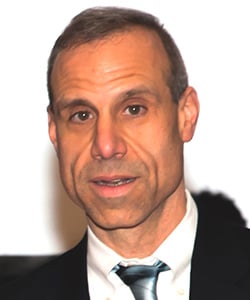
Following the tremendous energy and enthusiasm of the 25th Annual Pain Medicine Meeting, chaired by Dr. Tina Doshi of Walter Reed National Military Medical Center and the U.S. Food & Drug Administration and Dr. Ariana Nelson of UC-Irvine, I am profoundly grateful to everyone who contributed to ASRA Pain Medicine's success in 2026. According to the African proverb, “It takes a village…”, and the same is true for ASRA Pain Medicine.
Like the November midterms, ASRA Pain Medicine recently held elections, electing Dr. Kevin Vorenkamp, chief of pain medicine at Duke University, to the board of directors and Dr. Lynn Kohan, vice chair of faculty development at the University of Virginia, to the executive board. As John F. Kennedy once said, “Ask not what your country can do for you, but what you can do for your country.” Along these lines, Drs. Vorenkamp and Kohan are true servant leaders who lead by example. They each bring unique strengths to the board: Dr. Vorenkamp in advocacy and practice management, and Dr. Kohan in finding innovative ways to recruit, engage, and retain members.
The 25th Annual Pain Medicine Meeting received a record number of high-quality abstracts. More than 500 abstracts were submitted, and the meeting prominently featured research through special podium presentations by Best of Meeting awardees, Resident/Fellow Best of Meeting Travel awardees, the Patient Safety awardee, and select President’s Choice awardees. Accepted abstracts included authors from all continents except Antarctica, and the award winners reflected the diverse geographic locations of abstract submitters. Unlike at some other conferences, ASRA Pain Medicine abstract award winners are provided opportunities to present their work at the podium in front of over 1,000 attendees. Click here to see the full list of award recipients.
The annual meeting once again kicked off with the pre-meeting Special Symposium: Advancing Practice Across the Military and VA Health Systems, led by Captain C. Ryan Phillips, MD, chief medical officer for the U.S. Navy Medical Forces Pacific and the service’s pain management specialty leader, and Dr. Elias Veizi, a trained surgeon and pain medicine specialist who is chief of the pain medicine service line at the Northeast Ohio VA Health Care System. Sessions spanned rehabilitation, behavioral health, interventional care, and neuromodulation, all grounded in the latest research translated into practice. Attendees left with practical strategies to apply across the United States Department of Defense and Veterans Affairs health systems. This symposium has received widespread acclaim in past years, so we were not surprised that many non-military and non-VA health care providers attended this year, as many of the most important discoveries made during war have transformed medicine worldwide. These include, but are not limited to, triage and evacuation, blood and plasma storage, management of shock, prevention and treatment of infectious disease, prosthetics and establishment of the specialty of physical medicine and rehabilitation, and management of signature injuries of war such as post-amputation pain, post-traumatic stress disorder, traumatic brain injury, and complex regional pain syndrome. ASRA Pain Medicine extends special thanks to symposium sponsors Mainstay Medical, SPR, and Vertex.
With the theme, “Launch Control, We Have Liftoff! Expanding the Horizons of RAAPM,” meeting chairs Drs. Ashley Shilling and James Kim are embracing the Houston location and proximity to NASA throughout the meeting. Abstracts will open November 18, so save the date and watch for additional information in the coming weeks.
On the same day, ASRA Pain Medicine held its fourth annual Advanced Interventional Pain Management Course and Workshop for Fellows, chaired by Drs. Heejung Choi and Prentiss Lawson. Due to high demand for the 2025 course, the number of participants was expanded to over 45 for 2026, giving fellows more opportunities for high-quality education and hands-on training. The course paired didactics on patient selection, imaging, treatments, evidence, and risk mitigation with a five-hour, hands-on anatomy lab on the latest interventional technology led by renowned experts. Abbott, Boston Scientific, Medtronic, SPR, and Stryker generously supported this event. We thank all our partners; without their support, we could not provide this high-level educational program.
The annual meeting featured sessions covering cannabinoids, neuromodulation, artificial intelligence, holistic management of complex cases, cancer pain, and novel analgesics. Twenty problem-based learning discussions and 20 workshops covered a wide range of topics. Three special tracks featured educational excellence, practice management, and physician assistant-, nurse practitioner-, and nurse-specific content. There were also several highly anticipated debates, including “Ablate vs. Regenerate: Will RFA/BVNA Stay the Course or Will Regenerative Therapies Turn the Tide?" and “Future-Proof Pain Medicine: Defining Expertise in the Age of AI.” These debates did not disappoint. Capping off another successful Pain Medicine Meeting, colleagues and friends, both old and new, came together for the ever-popular Saturday Night Celebration.
Once again, our meeting also coincided with the American Medical Association’s (AMA) Interim Meeting of the House of Delegates, held November 6-10, 2026, in Orlando, FL. ASRA Pain Medicine was represented by our delegates, Drs. Richard Chou and Lee Tian, and Resident/Fellow Section Representative Dr. Ochuko Ogbon. Key themes of the Interim Meeting included legislative advocacy, health policy reforms, graduate medical education initiatives, and more. These efforts support ASRA Pain Medicine’s mission and vision through advocacy, inclusiveness, and service.
That advocacy extends to several issues directly affecting our members and their patients. After months of advocacy to protect access to peripheral nerve blocks and other chronic pain procedures, four Medicare administrative contractors (CGS Administrators, National Government Services, Palmetto GBA, and Wisconsin Physicians Service Government Health Administrators) have finalized their local coverage determinations (LCDs) on peripheral nerve injections and chronic pain procedures. While additional work remains, the final policy does include several important changes from the original proposal. We restored coverage or partial coverage for stellate ganglion blocks, lumbar sympathetic blocks, occipital nerve blocks, genicular nerve blocks, and genicular nerve radiofrequency ablation for select patients and/or when certain criteria are met. I want to thank all of our members who advocated through ASRA Pain Medicine, AMA, the Pain Medicine Coalition, state medical societies, and other forums, by presenting on behalf of our organization, sending letters to government administrators, directly appealing to legislators, and more. ASRA Pain Medicine will continue to advocate for blocks and procedures that saw no change from the proposed LCDs.
As we look toward 2027, I encourage each of you to continue investing in your education, career, professional community, and the future of regional anesthesia and pain medicine by renewing or maintaining your ASRA Pain Medicine membership. Encourage your colleagues to join. Click here to see the “Top 10 Ways ASRA Pain Medicine Membership Supports Your Career.” We will continue to offer free online learning and continuing medical education (CME) for members through ASRA Pain Medicine EDGE in 2027, led by Dr. Stuart Grant. This limited-time offer is a great way to complete all your 2027 CME at no additional cost beyond your membership dues.
Before we come together for the 52nd Annual Regional Anesthesiology and Acute Pain Medicine Meeting, we will join our sister societies in Santiago, Chile, for the 7th World Congress of Regional Anesthesia and Pain Medicine, being held on March 10-13, 2027. The congress will showcase the latest innovations, foster meaningful connections, and offer unparalleled opportunities to meet colleagues, mentors, and collaborators worldwide. ASRA Pain Medicine will be well represented throughout the congress, with more speakers than any society besides the host, the Latin American Society of Regional Anesthesia and Pain Therapy, and we hope to see many of you there.
In the February 2027 issue of the ASRA Pain Medicine News, I’ll take a deeper dive into the 52nd Annual Regional Anesthesiology and Acute Pain Medicine Meeting, being held May 13-15, 2027. With the theme, “Launch Control, We Have Liftoff! Expanding the Horizons of RAAPM,” meeting chairs Drs. Ashley Shilling and James Kim are embracing the Houston location and proximity to NASA throughout the meeting. Abstracts will open November 18, so save the date and watch for additional information in the coming weeks.
Pain Medicine is undergoing transformative changes that include a reduction in regional anesthesia fellowship applicants with a commensurate and predictable increase in the number of general anesthesiologists who incorporate regional anesthesia into their daily practices, and a change in the demographics of individuals who apply for pain medicine fellowships, with the biggest change being a surge in emergency medicine applicants. Yet we continue to stay ahead of and adapt to these changes by expanding and modifying our services, and we remain the main supporter of the Association for Pain Program Directors and the Regional Anesthesia Fellowship Directors Association. As I learned in the military, to survive and flourish in a crowded landscape, an organization must be proactive, combining vision with execution and contingency plans. As the great philosopher Mike Tyson once said, “Everyone has a plan until they get punched in the face.” Foresight and succession planning are what separated transformative leaders, such as George Washington, Abraham Lincoln, Mahatma Gandhi, and Winston Churchill, from great leaders who fell short in some of these areas, such as Alexander the Great (poor succession planning and neglect of governance) and Napoleon (inability to compromise and listen to opposing views). As we move into 2027, I am confident we will continue to remain the most influential pain medicine organization in North America; I look forward to what lies ahead.
As we close out 2026, I repeat what I have said many times before. Thank you as always for your continued support of and engagement with ASRA Pain Medicine. I wish you and your loved ones a happy and healthy holiday season and New Year!