Interview with Dr. Uchenna Umeh
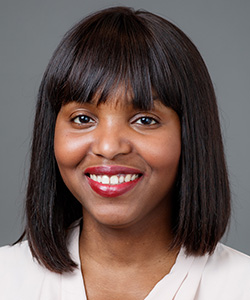
Dr. Uchenna Umeh is a regional anesthesia and acute pain medicine physician at the Hospital for Special Surgery (HSS) in New York, NY. She is a nationally recognized clinician, educator, and academic leader with a longstanding commitment to diversity, equity, and inclusion (DEI) in medicine. Dr. Umeh currently serves as chair of Pain Medicine’s Diversity, Equity, and Inclusion Special Interest Group, where she has led impactful initiatives focused on equitable care delivery, mentorship, and workforce representation. In 2025, Dr. Umeh was named a Fellow of ASRA Pain Medicine, recognizing her significant contributions to the society and her continued dedication to advancing the field of pain medicine.
Ashlyn Victoria Brown, MD, MBA, MS, physical medicine and rehabilitation resident physician at Baylor College of Medicine and incoming interventional pain fellow at Washington University in St. Louis, MO, recently interviewed Dr. Umeh. Dr. Brown serves in several national leadership and advocacy roles through ASRA Pain Medicine, the American Academy of Pain Medicine, and the North American Neuromodulation Society. She is deeply invested in mentorship, trainee development, and advancing inclusive excellence in pain medicine. Through the ASRA Pain Medicine Women in Pain Medicine Interview Series, she highlights the stories and insights of women shaping the future of the field.
Dr. Ashlyn Brown: Tell us about your path to pain medicine and what initially drew you to this specialty.
Dr. Uchenna Umeh: For context, I’m a regional anesthesia and acute pain medicine physician at Hospital for Special Surgery in New York City. When you’re a medical student or resident, you rotate through many subspecialties and try to figure out what truly resonates with you. I trained at Westchester Medical Center, where we had a few regional anesthesiologists who would come in to help with nerve blocks.
What really stood out to me was seeing the difference in the recovery room. Patients who had nerve blocks were more comfortable, calmer, and in less pain than those who had undergone general anesthesia alone. Those patients often appeared uncomfortable or nauseous, and nurses were giving repeated doses of fentanyl or hydromorphone. Even as a resident, walking through the PACU and seeing that contrast made a big impression on me.
I remember thinking that when I’m an attending, I want my patients to look comfortable. At my program, we had some exposure to regional anesthesia but not enough for me to feel confident that I’d be an expert. I wanted to be an expert. That’s what ultimately led me to pursue an additional year of fellowship training in regional anesthesia and acute pain medicine.
Brown: Thinking back to those early days, do you remember what your first day as an intern felt like?
Umeh: You’re always a little nervous and anxious at the beginning. You’re in a new environment, meeting new people, learning a new system, and trying to figure out where everything is—where the airway equipment is, where supplies are kept, all of that. In my program, interns were paired with one attending for the first month, which was really helpful because it provided consistency and someone to guide them.
Early on, I had a very impactful experience that I still think about. We had a routine knee arthroscopy on a healthy patient who had an allergy to cephalosporins, so we were supposed to give vancomycin. I remember drawing up the vancomycin and pushing it IV instead of infusing it over time in a bag. I don’t know what I was thinking—it just happened.
Suddenly, the patient became profoundly hypotensive and flushed. The surgeon was livid—I’ll never forget his face. But my attending was incredibly calm. He didn’t yell or shame me. He simply focused on managing the situation. We turned off the anesthetic, gave vasopressors, stabilized the patient, and moved forward.
I often think about how different that experience could have been if I had been with a different attending—someone who might have berated me in front of the surgeon. Instead, his calm approach gave me confidence at a time when I was very early in my training. I remember thinking, if I’m ever in this situation as an attending, this is how I want to respond. Things will happen, but tomorrow will be a better day.
Brown: You’ve taken on significant leadership roles, particularly in the DEI space. What sparked your passion for this work?
Umeh: Obviously, I’m an African American woman, and DEI work doesn’t feel separate from who I am. Early in my faculty career at NYU Langone, my department chair, Dr. Andrew Rosenberg, approached me about chairing a new DEI committee within the anesthesia department. I didn’t ask for the role—he asked me—and I agreed.
From there, we developed initiatives to address departmental issues, and NYU already had a strong institutional DEI infrastructure, which made it a supportive environment to grow that work. But beyond leadership roles, my passion for DEI has been shaped by my clinical experiences.
I remember seeing a patient in the preoperative clinic who was scheduled for a total joint replacement. Her surgery had been canceled previously due to poor glucose control, and her hemoglobin A1c was still very high. I initially approached the situation from a judgmental lens—assuming nonadherence. When I asked her why her glucose wasn’t controlled, she simply said, “I can’t afford the insulin.”
That moment really changed my perspective. I realized how often we label patients as “noncompliant” without understanding the structural barriers they’re facing. As anesthesiologists, we often see patients only once—during surgery—and it’s easy to miss the bigger picture. Equity means addressing upstream factors, such as access to medications, food insecurity, and transportation.
Brown: What progress have you seen in equity and inclusion within pain medicine, and where do we still need to go?
Umeh: There is definitely greater awareness now. People understand that pain care has not historically been equitable, and there’s a growing body of research documenting disparities. I wrote an editorial in the British Journal of Anesthesia on disparities in regional anesthesia and pain medicine, highlighting many of these issues.
More institutions are also engaging in data-driven research to examine where inequities exist—whether at the patient level or the system level. When I moved from NYU to HSS, one thing that attracted me was the work being done by leaders like Dr. Stavros Memtsoudis, who has published extensively on disparities in access to regional anesthesia for patients undergoing joint arthroplasty.
That said, awareness isn’t enough. Disparities still exist. Departments need to examine language access, standardization of pain protocols, and structural barriers such as insurance coverage, geography, and rural versus urban access to pain care. We also need stronger policy and advocacy efforts to integrate equity into healthcare standards at every level.
Brown: How can we better empower individuals from underrepresented backgrounds to pursue and thrive in pain medicine?
Umeh: Mentorship is essential, but exposure is just as important—and it needs to happen early. Waiting until college or medical school is too late. That’s why I developed the Healthcare Immersion Program at HSS, which brings high school students from underrepresented and lower socioeconomic backgrounds into the hospital for hands-on exposure to healthcare careers.
Students rotate through stations with anesthesiologists, surgeons, nurses, physical therapists, scrub techs, and radiology staff. The message is: you don’t have to be a doctor — there are many stable, meaningful careers in healthcare. You can’t aspire to what you’ve never seen.
We expanded this idea nationally through the American Society of Anesthesiologists (ASA) by bringing high school students into the annual meeting. They shadowed physicians, attended workshops, and explored the exhibit hall. That kind of exposure can be life-changing.
For trainees, mentorship and sponsorship matter. ASRA Pain Medicine’s Mentor Match Program and ASA’s Mentoring Program are excellent ways to connect with faculty, collaborate on projects, and build long-term professional relationships.
Brown: Have you faced challenges as a woman or as a Black woman in pain medicine?
Umeh: That’s a hard question for me because I don’t always view challenges through that lens. Medicine itself is stressful and competitive. That said, there are moments when patients are surprised that I’m their physician, or the staff assumes I’m not the anesthesiologist. It’s not always malicious—sometimes it’s just unfamiliarity.
I don’t let those moments discourage me. As more women and minorities enter medicine, those assumptions will fade. The goal is normalization—so no one is “the first” anymore.
Brown: Have you experienced discouragement or burnout, and how did you recognize it and work through it?
Umeh: You always experience discouragement in medicine. I won’t go into specific details, but for example, you may submit a manuscript that you’ve worked on for years, something you’ve poured a lot of time and energy into, and it gets rejected. That can be incredibly discouraging in the moment—especially when you realize that something you invested so much in isn’t going to move forward.
But you can’t let that stop you. You take a moment, talk it through with trusted mentors or colleagues, ask what could have been done differently, and then you put it aside and move on. You can’t let one rejection define you or halt your progress.
Burnout is also difficult to avoid in our field. We work long hours, we manage high-stakes situations, and there are days when cases don’t go well. Sometimes you feel criticized by colleagues or staff, and it can weigh heavily on you when you go home. That’s why having strong family support is so important.
For me, coming home and helping my daughter with her Spanish homework can actually be a mental break. You’ve had a long, stressful day, but suddenly your focus shifts—you’re helping her study for a test, and your mind is forced to move away from work. In a strange way, those moments help ground you and give you perspective.
Brown: Given that you wear so many hats—clinician, leader, mother, wife—what does work-life balance realistically look like for you?
Umeh: I always feel a little guilty when people talk about “work-life balance,” because work is part of life. I don’t love the idea that work is separate from life. That said, if I’m being honest, my balance is probably tilted more toward work than family at this stage.
I try to prioritize the important moments. For example, my daughter had a holiday recital recently, and I asked the anesthesia charge if I could leave at a specific time so I could make it. I can’t make it to everything—I’ve missed recitals, school plays, and events when I’ve been traveling for conferences—but when I can be there, I try to be intentional.
When I’m home, I try to be present. Even if it’s just one hour, I put my phone away and focus on my kids. I’m also very fortunate that my husband has a more flexible schedule and can support our family when I’m not there. Sometimes participation looks like Zooming into parent-teacher conferences from the OR—mask on, earbuds in—but if that’s what it takes, then that’s what you do.
Balance changes over time. When my kids were babies, family came first because it had to. As they got older, I became more involved in ASRA Pain Medicine, ASA, and New York State Society of Anesthesiologists. I think the key is recognizing when things are out of balance and adjusting when you can.
Brown: Within all of your roles, what aspect of your work brings you the most joy?
Umeh: Providing excellent clinical care brings me the most joy. Going back to what I said earlier, when you see your patient in PACU comfortable and not in pain—that’s incredibly rewarding.
I’ll give you an example. I was on call recently and took care of a patient who had a very painful experience after a prior surgery. His spinal wore off too quickly, and he woke up in excruciating pain. He was terrified to come back for revision surgery because of that experience.
This time, I added a femoral nerve block along with the spinal. When I saw him the next morning, he was still comfortable and pain-free. He and his family repeatedly thanked me and told me how different this experience was. The only difference was a long-acting nerve block—but to him, it changed everything.
Another patient delayed surgery for six months because he developed postoperative urinary retention after his first joint replacement and had to go home with a Foley catheter. When he returned for surgery on the other side, his biggest fear wasn’t pain—it was urinary retention. We talked through his anesthetic plan carefully, adjusted medications, minimized risk factors, and when he was able to urinate in recovery, he was overjoyed.
Those “small” things make a huge difference to patients. For us, it may feel routine—but for them, it’s their entire experience.
I also love teaching and mentorship. Watching trainees grow, present abstracts, and gain confidence through collaboration brings me a lot of joy. And of course, developing DEI programs like the Healthcare Immersion Program and the ASA high school initiative—knowing those students may one day become healthcare professionals—is incredibly meaningful.
Brown: On a lighter note, where would we find you on a Saturday morning at 10 a.m.?
Umeh: Either at the gym or at home, having breakfast and relaxing with my kids—unless I’m working. Saturdays are usually family time.
Brown: What’s your go-to on-call snack?
Umeh: Levain cookies. Every time. I order the four-pack when I’m on call. I don’t eat all four—my kids help with that—but they’re definitely my weakness.
Brown: To close, what is one piece of advice you’d give to your younger self or to a young woman entering pain medicine today?
Umeh: Believe in yourself and don’t be discouraged when doors don’t open right away. People will say no—that doesn’t mean you stop trying. You just knock on another door.
Get involved in ASRA Pain Medicine and build your community. Pain medicine is a village, and every opportunity I’ve had has come through people in this field who believed in me and opened doors.
And finally—ask for what you want. Early in my career, I didn’t realize I was allowed to ask for a raise or a promotion. Once I learned that I could ask, everything changed. All they can say is no. And sometimes, after enough times asking, that no turns into a yes.