Stewards of Potential: The Role of Mentorship in a Nontraditional Journey
“Those people who became doctors—do they have two heads?”
That was my mother’s response when I first admitted I wanted to become a physician. I was struggling with the confidence to pursue such a lofty goal, but her point was clear: I was just as capable as anyone else. My mother had been preaching this specific, cultural brand of self-confidence to me my entire life. Her statement was rooted in the belief that achievement was not a birthright of the few but a result of audacity and hard work. Yet while I left that conversation filled with newfound vigor and zeal, I faced a significant hurdle. I was only six months into my career as a new graduate registered nurse, and I had no idea how I would turn that into a career as a physician.
My story is a testament to the profound impact of mentorship, particularly for those of us walking nontraditional paths.
Up until that point, my educational path had been strictly traditional: earn good grades in high school, attend a reputable college, and settle into a career for 40 years. This new ambition upended that trajectory entirely. I had never taken a "nontraditional" path in my educational life; I was more accustomed to the safety of a conventional road. In fact, I wasn’t even sure it was possible for a nurse to transition into medical school, as I had never seen that bridge crossed in the clinical environments where I worked. Because I lacked a visible precedent for this transition, I initially believed there were no established avenues to pivot from the world of nursing to the world of medicine.
Then, I met Dr. Hafeez Olalemi. We met by chance at a Nigerian young professionals gathering in Houston. At the time, he was an anesthesiology resident new to the city. We initially connected over shared interests and the familiar comforts of our culture, but the conversation shifted when he learned I was a nurse.
“Oh, really? I was actually a nurse too before I became a physician,” he told me.
It sounds dramatic, but that single sentence validated my entire future. It was the "proof of concept" I desperately needed. In Dr. Olalemi, I saw a reflection of my own potential. If he could navigate the pivot from nursing to medicine, why couldn't I? After all, he didn’t have two heads. From that moment on, Dr. Olalemi provided more than just encouragement; he provided the technical blueprint for my journey. He helped me navigate the nuances of post-baccalaureate requirements, shared strategies for MCAT studying, and coached me on how to frame my nursing experience as a clinical asset rather than a detour. Four years later, his guidance proved instrumental in my admission to medical school. Even now, as an attending physician himself, he remains a consistent source of advice, helping me navigate the complexities of professional expectations in the medical field.
This pattern of mentorship followed me into medical school, where the stakes felt higher and the path more demanding. During my first year, I had the privilege of meeting Dr. Amy Woods, the director of medical student education for the Department of Anesthesiology and Pain Management. From the moment I expressed an interest in the specialty, she took me under her wing, acting as both a navigator and a champion. Her support was irreplaceable. She didn't just offer generic reassurance; she provided tangible direction that transformed my student experience. She steered me toward leadership opportunities I would have otherwise overlooked, such as serving as the co-president of our school’s Anesthesia Student Interest Group. Under her mentorship, I learned how to organize educational workshops and lead a team, cultivating the skills that eventually led to a national award from the American Society of Anesthesiologists for our student interest group. More importantly, she remains a vital mentor, providing the strategic foresight I need to navigate the competitive landscape of anesthesiology residency applications.
While these three pillars of my journey—my mother’s cultural wisdom, Dr. Olalemi’s blueprint, and Dr. Woods’ professional stewardship—stand out, they represent a much broader network of individuals who served as catalysts for my advancement. My story is a testament to the profound impact of mentorship, particularly for those of us walking nontraditional paths. There is something truly noble about seeing the untapped potential in another person, helping them cultivate it through the fog of self-doubt, and then pointing them toward a path where that potential can flourish. It is the difference between a dream that withers and a career that takes flight.
As I progress in my medical career, I frequently reflect on where I would be if our paths had never crossed. Mentorship took a nurse with a quiet ambition and helped transform him into a confident future physician. It replaced my uncertainty with a roadmap. I only hope that, in the years to come, I can offer a future hesitant student the same clarity my mentors gave to me and remind them that we don’t have two heads, just the audacity to try.
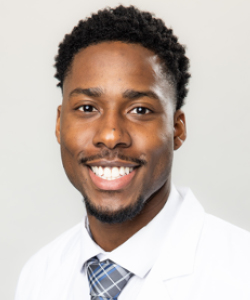 Chinanuekpere Phil Emma Ezeala is a third-year medical student at the University of Texas Southwestern Medical School in Dallas, TX. He earned his Bachelor of Science in Nursing from the University of Pennsylvania and worked as an intensive care unit nurse for 5 years before entering medical school. In his free time, he loves working out, playing a lot of basketball, and watching movies. Recently, he has been learning Spanish so that he can better serve his future patients in their native language.