Behind the Drape and Beyond
Beep “Why can’t I see anything?” Beep “Maybe I should just shove the tube in.” Beep “I should’ve just used the McGrath.” Beep These thoughts echoed through my head until Dr. Mahmoud calmly asked me to tell him what I saw and confirm that our patient was stable. He reminded me to tell him to apply cricoid pressure and to slightly readjust before lifting again. “Cords, tube, stylet, boom.” My eyes darted around the room checking everything he’d taught me: chest rise, condensation, end-tidal, phew. This is mentorship in action, but the mentorship that Dr. Mahmoud embodies extends far beyond single moments like this. Because of his listening, educating, and empowering, I’m certain I will be a better future anesthesiologist.
As the first in my family to pursue a career in healthcare, I discovered that medicine provided the only career in which I could make a meaningful impact each day. In medicine, I saw the ability to return home every day knowing I’d made an impact on the morale of my team, the knowledge of students, and the care of my patients. As I learned the physiology, procedures, and medical technology that embody anesthesiology, I became more certain that these elements were ultimately essential for how I aimed to find fulfillment as a physician.
I realized the unmatched opportunity this specialty provides: the ability to practice critical, life-sustaining medicine while being the person who creates confidence, comprehension, and safety during pivotal moments.
However, one hesitation remained: “Am I throwing away the gratification I get from connecting with people, building trust, and teaching?” Without me asking, it was Dr. Mahmoud who answered this question. He entered each room with emotion and compassion, connecting with parents, children, and spouses by simply being a genuine human. He built trust, shared plainly how his job was to keep them safe, and elegantly highlighted what to expect each step of the way. This was something some told me isn’t needed when you’re “just putting your patients to sleep.” Yet through him, I learned that the values and abilities he practiced represent the foundation of truly meaningful care in someone’s most vulnerable moments. As I learned from him, I realized that my strengths of quickly instilling confidence, trust, and empathy in patients were not skills “wasted” in a field where you “don’t talk to people.” Instead, I realized the unmatched opportunity this specialty provides: the ability to practice critical, life-sustaining medicine while being the person who creates confidence, comprehension, and safety during pivotal moments.
Between the exciting chaos of screaming alarms, pressor administrations, and invasive monitors, there are many moments of preparing, monitoring, and maintaining. It’s in these moments that some providers struggle to teach or figure out what to allow us medical students to do. This can mean standing to the side, watching, waiting, and understanding nothing. Then there’s the opposite. There’s the mentor who shows you how to quickly calculate dosage conversions, draw up medications, always check labels three times, hook up monitors, and change ventilator settings. There’s the educator who draws out a heart with pressure changes, shares respiratory physiology comparisons, and encourages you to identify orienting structures on the transesophageal echocardiogram. There’s the person who asks about your family and where you hope to practice. Dr. Mahmoud embodies each of these traits. He had a pivotal role in my sense of purpose behind the drape and what I was able to gain from each day.
In the operating room, Dr. Mahmoud challenged me in each situation by simulating decisions as if they were my sole responsibility to make. However, as we sat down between cases, I could tell he was genuinely interested in what intrigued me in medicine, anesthesia, and life. He encouraged me to chase my motivators while cautioning me not to spread my excitement too thin. Although he feels his “research career” has come to an end, he asked me about my recent projects and challenged me to explain proposed mechanisms and the clinical implications of our findings. He offered advice on ways to prepare for my upcoming presentations, and he advised me on how to demonstrate my interest in future programs. As someone who has served on committees, taught residents, and worked across the world, he said that the few simple things he always searches for are learners who are genuinely good people, who continue to read, and who are passionate about improving themselves.
As someone who hopes to be a mentor in an academic program, I plan to carry Dr. Mahmoud’s encouraging yet honest advice forward with me. I learned that career-long fulfillment comes through different elements and many avenues. In some phases, his gratification has come from teaching, while in others, it has included working independently and even writing a book. He reminded me that there are countless pathways to take in my career yet after residency. I should become comfortable practicing in a difficult environment, master my skills for a few years, and then pursue what excites me most—and financial security will follow. His character reaffirmed my belief that connecting with people through what inspires them is one of the best ways to mentor, aid success, and uplift the future of the field. From his intangible advice to directly introducing me to his colleagues and anesthesiology administrators, I felt Dr. Mahmoud connected me to a future I was proud to pursue.
When I’m an attending, I’m determined to emulate each of these fun, important, and personalized moments. If you are a CRNA, resident, or attending reading this, please know that if you let a medical student help prepare the patient, fill medications, or simply share why you’re changing ventilator settings, you will have a lasting impact on their education. I ask you to be a student’s Dr. Mahmoud and provide them the opportunity to experience a small part of what makes anesthesiology fun, individualized, and meaningful.
Ultimately, I hope my measurement of success will come from reflecting on how I’ve impacted similar future physicians. “You can ventilate a patient forever. I could train a monkey to intubate with enough time, but being able to ventilate properly is what matters most.” This is Dr. Mahmoud’s phrase I carry with me as reassurance anytime I struggle to intubate a patient now. While these procedural skills, his notes on cardiac physiology, and induction priorities in pediatrics stick with me, his encouraging yet honest advice is what I appreciate most in our continued relationship. It’s a resource that I’m certain I could only find from a caring mentor like him. Not only will it be immensely rewarding for me to someday care for patients the way he does, but it will be a privilege to have a similar impact on a future physician’s confidence, abilities, and passion, just as he has had on mine.
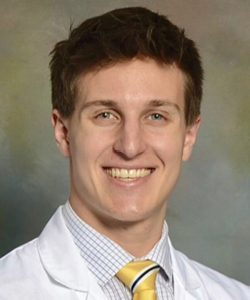 Jake Fanizza is a third-year medical student at Drexel University College of Medicine pursuing anesthesiology. He has an interest in anesthesiology-related medical device design and is involved in multiple research projects surrounding perioperative outcome optimization. He currently serves as vice president of his medical school’s Student Government Association, a peer mentor and tutor, and volunteers as an elementary reading tutor. In his free time, he loves any crazy fitness challenge, and this past fall, he raised over $4,100 running the Rocky Steps for 24 hours straight! To him, anesthesiology provides the ability to make an impact each day. This means applying the pinnacles of medical innovation while educating future clinicians to ultimately provide what patients need in their toughest, life-sustaining moments.