Interview with Dr. Ana Lisa Ramirez-Chapman - Hispanic Heritage Month 2026
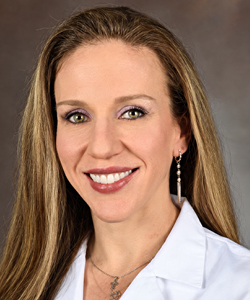 Tell us your name, where you work, and your current leadership roles at your home institution and other societies.
My name is Ana Lisa Ramirez-Chapman. I am currently an associate program director for the Houston Methodist Hospital Anesthesia Residency Program in Houston, TX. Prior to this role, I served as the inaugural director of the Obstetric Anesthesia Fellowship at UTHealth Houston McGovern Medical School, where I had the privilege of helping establish and develop the fellowship program from the ground up.
Who has served as an inspiration in your life?
My children have been my greatest source of inspiration. They inspire me to be the best version of myself, to persevere when obstacles arise, and to remain open to the possibility that life may take us in directions we never originally planned, sometimes leading us to places that are even better than what we had imagined.
I want my children to remember that their mom worked hard to pursue her dreams, but that they were always my first priority. I also want them to see that it is possible to create balance in your life by setting boundaries, taking risks, and being willing to redefine what success looks like at different stages of life.
Most importantly, I want them to remember how much I loved what I did. Medicine is an incredible privilege, and I hope they remember their mom not as someone who was always complaining about work, but as someone who genuinely appreciated the opportunity to make a difference every day.
Ultimately, my children inspire me to stay positive, embrace change, and recognize each day as a blessing.
What challenges have you faced on your journey so far as a physician and anesthesiologist? How did you overcome them?
One of the greatest challenges was starting my family during medical school and residency at a time when there was considerably less support and understanding for physicians who were also parents. Balancing the demands of training with raising young children was not easy, and there were certainly moments when I questioned whether I could successfully do both.
I learned early that there is no perfect balance. There are seasons when your career demands more from you and seasons when your family does. The key is learning to be present and intentional with whichever one needs you most at that moment.
Having children while I was still in training also meant that my path did not always look like everyone else's. At times, I felt like I was starting from behind my peers, but those experiences ultimately taught me resilience, patience, and the importance of believing in myself even when others may not have shared that belief.
Looking back, I am grateful for those challenges because they shaped the physician, educator, and leader I am today. They also gave me a deep appreciation for the importance of mentorship and creating a more supportive environment for the generations coming behind us.
How do you celebrate Hispanic Heritage Month?
For me, Hispanic Heritage Month is an opportunity to celebrate the traditions that have always connected our family. I love making the traditional Mexican meals my mother made when I was growing up and sharing those traditions with my children.
It is also a time to talk with them about where we come from and the values that are deeply rooted in our culture—family, faith, hard work, perseverance, and taking care of one another.
I hope that by keeping these traditions alive, my children will understand and appreciate their roots and recognize how much of who they are was shaped by their ancestors.
Why do you think it’s important to recognize and celebrate Hispanic Heritage Month?
Whatever successes we achieve today were built, in part, on the dreams, grit, sacrifices, and creativity of the generations who came before us. Our ancestors often faced limitations that many of us have the privilege of facing less frequently today—whether those limitations involved financial resources, language barriers, educational opportunities, or access to healthcare and other resources.
Celebrating Hispanic Heritage Month allows us to recognize those sacrifices and appreciate the people who paved the way, making it a little easier for each generation that followed to pursue its dreams.
For me, that gratitude is important. It reminds us to remain humble, resilient, and motivated, particularly on the days when the path feels difficult. We stand on the shoulders of people who dreamed of opportunities that they themselves might never have had.
Tell us about some of your research, education, or advocacy initiatives and other projects.
Much of my academic work has centered around education and building programs that prepare the next generation of anesthesiologists to care for an increasingly complex patient population.
I had the opportunity to establish an Accreditation Council for Graduate Medical Education (ACGME)-accredited obstetric anesthesia fellowship and have also been involved in developing and strengthening residency education. Both experiences have reinforced for me how important it is to build strong educational foundations for physicians who will care for patients with increasingly complex medical conditions.
This is particularly important as our population ages and the prevalence of comorbidities increases, while patients simultaneously have unprecedented access to health information—and misinformation—through social media. As physicians, we have an important responsibility not only to provide excellent clinical care, but also to educate our patients and help them navigate an increasingly complicated healthcare environment.
Advocacy is also important to me, particularly advocacy for women and equitable access to healthcare. As an obstetric anesthesiologist, I have seen firsthand how profoundly access to appropriate medical care can affect women and their families. I believe physicians have a responsibility to advocate for our patients and for evidence-based, compassionate healthcare.
Why are diversity and inclusion important in medicine and in obstetric anesthesia, regional anesthesia, and pain medicine?
Diversity and inclusion matter because our patients come from every background, and their experiences with healthcare are not all the same.
Many minority communities face barriers to accessing high-quality healthcare, including limited resources, language barriers, health literacy challenges, and historical mistrust of the medical system. These disparities can be particularly consequential during pregnancy and other vulnerable periods of a patient's life.
Having a diverse healthcare workforce helps us better understand the communities we serve and creates opportunities for patients to see themselves represented in medicine. Representation also matters for trainees. When young physicians see people who share aspects of their background succeeding in medicine, it can change what they believe is possible for themselves.
Ultimately, diversity makes us better physicians. It broadens our perspectives, challenges our assumptions, and helps us provide more compassionate and equitable care.
What career accomplishment makes you most proud?
One of the accomplishments I am most proud of is establishing an ACGME-accredited obstetric anesthesia fellowship and watching it grow into a program that has trained outstanding obstetric anesthesiologists who are now helping make obstetric care safer and more comfortable for mothers and their babies.
What makes this accomplishment particularly meaningful is the personal journey behind it. I started my own residency training with two small children and faced setbacks along the way. There were people who questioned whether I would be able to successfully complete my training.
Those doubts could have discouraged me, but instead they became motivation. I persevered, completed my training, and ultimately had the opportunity to build a fellowship program that has gone on to train others.
I think that is why the accomplishment means so much to me. It represents more than starting a program. It represents the idea that the path may not always look the way you imagined, and you may have to work harder or take a little longer than someone else—but that does not mean you cannot reach your destination.
If anything, I hope I proved those who doubted me wrong while also proving something more important to myself: that setbacks do not have to define the trajectory of your career.
What advice would you give to young physicians as they navigate their careers?
Give yourself grace. Listen to your gut. Be patient with yourself and with the process.
Remember where you came from and how much blood, sweat, and tears you invested to get where you are. On difficult days, think about the moments when you made a difference, whether it was with a patient, a student, a colleague, or someone you mentored. Those moments are the ones that remind us why we chose this profession.
Never lose sight of the privilege of getting to do what we do. We represent a very small percentage of people who have dedicated so much of their lives to becoming physicians, but we are also incredibly fortunate to have the opportunity to make a meaningful difference in people's lives.
Stay humble. Never stop learning. Be willing to change course when life requires it. And don't be afraid to define success on your own terms.
Most importantly, remember that your career is only one part of your life. Protect the people and relationships that matter to you, celebrate the small victories, and don't wait until you reach the next milestone to appreciate how far you've already come.
Is there anything else you would like to note?
I believe representation is one of the most powerful forms of advocacy. When we see people from diverse backgrounds represented in medicine, leadership, education, and other positions of influence, it sends a message to the next generation that these opportunities are possible for them too.
We also have a responsibility to use our voices beyond the walls of the operating room. Many of the patients we serve, particularly those from underserved and minority communities, face barriers that extend far beyond the healthcare system. We should encourage civic engagement, educate our communities about their healthcare rights and resources, and advocate for policies and leaders that protect access to high-quality, evidence-based healthcare.
As physicians, we have been given an extraordinary platform and an extraordinary responsibility. I hope we use both to make the path a little easier for the people who come after us.
Dr. Ana Lisa Ramirez-Chapman is an associate professor of anesthesiology and associate program director of the Anesthesia Residency Program at Houston Methodist Hospital in Houston, TX. She received her undergraduate degree from Rice University and her medical degree from the University of Texas Health Science Center (UTHealth) Houston, followed by residency training in anesthesiology at UTHealth and fellowship training in obstetric anesthesia at Baylor College of Medicine.
Dr. Ramirez-Chapman has dedicated much of her career to obstetric anesthesia, medical education, and mentorship. She served as the inaugural director of the Obstetric Anesthesia Fellowship at UTHealth, where she successfully established an ACGME-accredited fellowship program and developed its curriculum. She has also served as director of obstetric anesthesia at Lyndon B. Johnson Hospital and remains actively involved in education through the Society for Obstetric Anesthesia and Perinatology and other professional organizations. A passionate educator and mentor, Dr. Ramirez-Chapman has mentored medical students and trainees throughout her career, including through the Latino Medical Student Association and the Rice University Society of Latino Alumni mentorship program. Her academic interests include obstetric anesthesia, point-of-care ultrasound, simulation-based education, patient safety, and curriculum development. Outside of medicine, she enjoys cooking, traveling, attending her children's sporting events, and training for running races herself. Her professional journey is deeply rooted in the belief that representation matters—not only for the patients we serve, but for the young people who are deciding whether a career in medicine is possible for them.