Finding My Place in Medicine: Heritage, Service, and the Responsibility to Give Back
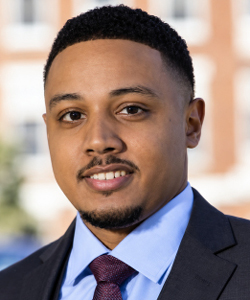 Growing up as the son of Dominican immigrants, I never thought much about what it meant to be represented in medicine. I simply knew that physicians did not often look like the people in my family or come from backgrounds that resembled my own. As a first-generation college student, the path to becoming a physician was not one that felt predetermined. It was something I discovered gradually through my family, my community, and the people I have met along the journey.
After immigrating to the United States from the Dominican Republic, my mother had to learn how to navigate a whole new healthcare system. Growing up, I often went with her to appointments and helped her understand medical information. At the time, I never thought much of it. I was simply helping my mother. Looking back now, I realize those experiences gave me an early understanding of how overwhelming health care can feel when you are trying to navigate an unfamiliar system.
[T]he impact of medicine is not always measured by the complexity of an intervention. Sometimes it is measured by whether we are willing to recognize a need and make care accessible.
Those experiences took on greater meaning when I began volunteering as an undergraduate at the University of Connecticut Migrant Farm Worker Clinics. We provided free basic healthcare to uninsured farm workers, many of whom were Hispanic and faced significant barriers to routine medical, dental, and vision care. I registered patients, obtained vital signs, and helped wherever I was needed, including serving as a Spanish interpreter.
One patient in particular has stayed with me. His poor vision was interfering with his ability to work safely and effectively. Through the clinic, he received an eye examination and a pair of glasses. It was a simple solution, but its impact extended far beyond his eyesight. Seeing more clearly meant working more safely and maintaining his ability to support himself and his family. That experience taught me that the impact of medicine is not always measured by the complexity of an intervention. Sometimes it is measured by whether we are willing to recognize a need and make care accessible.
As I continued through college and into medical school, I became more aware of what it meant to pursue medicine as someone from a background that remains underrepresented. I began to appreciate how much it mattered to see people with experiences like mine in these spaces. At the same time, I realized that representation was about more than simply being there. It was also about using my experiences to support others, give back to my community, and help make the path into medicine feel possible for those coming after me.
During medical school, I served as president of the Latino Medical Student Association. Through cultural events, mentorship, advocacy, and community engagement, I had the opportunity to help create spaces where Latino students could see their identities as strengths rather than something separate from their professional lives. For instance, our annual Fiesta Night was not only a celebration of food, music, and tradition, but an opportunity to share our cultures with our classmates and affirm that our experiences and identities belonged within the walls of medicine.
My commitment to service also continued through my role as the director of Patient Education for the Bobcat Community Health Alliance, a student-run clinic in New Haven, CT. I helped develop educational resources on nutrition, exercise, chronic disease, and lifestyle modification for patients from communities who have historically faced barriers to care. That experience taught me that patient education is about more than simply providing information. It is about making sure patients understand what we share with them and can apply it meaningfully to their everyday lives.
Over time, I came to understand that my responsibility as a healthcare professional extended beyond the patients directly in front of me. I wanted younger students from communities like mine to see medicine as a possibility for themselves. Through mentorship, outreach, and advocacy, I have tried to make medicine visible to those coming after me. I know what it means to enter spaces without always seeing people whose stories resemble your own. My experiences have made it especially meaningful to now have opportunities to stand in front of students and allow them to see another version of what a physician can look like and where a physician can come from.
Now, as an anesthesiology resident, these experiences continue to shape the physician I am becoming. Anesthesiology requires knowledge, vigilance, and the ability to make critical decisions. It also requires a lot of trust from patients. I often meet patients shortly before they place their life in my hands. Within that brief encounter, I am reminded that every patient arrives with experiences, fears, and beliefs that may never appear in their medical record. My heritage has taught me to remain curious about those parts of a patient's story.
When I reflect on my journey—from helping my mother navigate health care, to serving migrant farm workers, to advocating for Latino students, to caring for patients as a physician—I recognize that my understanding of representation has changed. Early in my journey, representation meant seeing someone like me in medicine. Today, it means being able to recognize the responsibility that comes with becoming that person for someone else.
For me, Hispanic Heritage Month is an opportunity to celebrate not only where we come from, but also what we choose to carry forward. I carry with me my Dominican heritage, my family's sacrifices, the communities that trusted me long before I became a physician, and the responsibility to create opportunities for those who will follow.
I am proud of where I come from and grateful for the experiences that have shaped the physician I am becoming. As I continue my journey in medicine, I hope to honor those experiences by serving my patients, supporting my community, and helping others from backgrounds like mine see that there is also a place for them in medicine.
Frank Tavarez-Mora, MD, is an anesthesiology resident at Yale New Haven Hospital and a graduate of the Frank H. Netter MD School of Medicine at Quinnipiac University in New Haven, CT, where he completed a concentration in health policy and advocacy. As a first-generation college graduate and the son of Dominican immigrants, Dr. Tavarez-Mora earned his bachelor of science in biology from Southern Connecticut State University and earned a Public Health Certificate at the University of Connecticut prior to pursuing medicine. Throughout his training, he has been deeply committed to mentorship, health equity, advocacy, and expanding pathways into medicine for students from underrepresented and underserved communities. His leadership and advocacy have included involvement with the Latino Medical Student Association, Student National Medical Association, medical school admissions, and sickle cell disease advocacy at the state and national levels. Drawing from his own nontraditional journey to medicine, he is passionate about helping students recognize that their backgrounds, experiences, and challenges can become strengths as they pursue careers in health care.