Restoring Function Through Pain Medicine
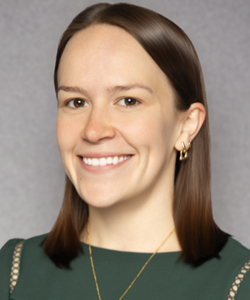
Four years as a Division I diver taught me a couple of unexpected things, including the impact of pain and the limits it set on daily activities. I also saw what recovery can look like when someone is properly supported. This experience solidified my interest in pain medicine.
Pain is not simply a symptom to manage. It is a bottleneck that determines whether the rest of rehabilitation succeeds or fails. As a physical medicine and rehabilitation resident, I have watched patients work hard in therapy and still plateau, not from lack of effort, but because their pain was not well controlled, which impeded their participation in therapy. When a patient’s pain is addressed, it does not just lower a number on a scale; it also restores the patient’s ability to participate fully in their own recovery.
Stemming from this understanding, I am currently working on a quality improvement project to form a streamlined process for intra-articular joint injections for patients admitted to our acute inpatient rehabilitation hospital. This project has evolved into a musculoskeletal consult service where our team provides patients with procedures aimed at addressing their pain while they are in the thick of therapy. Our goal is to improve the patient’s ability to participate fully and thereby improve outcomes prior to discharge. We are analyzing whether offering these injections to rehabilitation hospital inpatients improves overall outcomes prior to discharge and potentially shortens hospital timelines compared with the traditional protocol, where injections are not delivered until post-discharge as outpatient procedures.
Research has further reinforced my conviction to pursue a pain medicine fellowship. In addition to the above QI work, my research on the pharmacogenomics of opioid consumption after anterior cruciate ligament reconstruction highlighted the variation in pain medication metabolization that directly impacts how patients experience pain treatment. A research gap remains in personalizing care to improve recovery, and I look forward to continuing to explore the field during fellowship.
What keeps me engaged with pain medicine is how quickly the field moves, even though that pace comes with real demands. I have met attendings who trained in one era of pain medicine and continue to learn entirely new procedures that became central to their practice. Keeping pace with a changing field is a challenge, but it is also a great opportunity to shape what evidence-based medicine and the standard of care will look like for the next generation. I want to contribute through both research and clinical practice to help push the field forward.
Through ASRA Pain Medicine, Women in Pain Medicine, and national meetings, I have had the opportunity to talk with pain fellows and attendings from programs across the country, and I am excited for what lies ahead. I find pain medicine a fascinating specialty where clinical need, research opportunity, and the pace of innovation are all vital facets to a successful career in pain medicine.