ASRA Pain Medicine Diversity SIG: Pain Fellowship Pathways Interview with Dr. Storm Horine
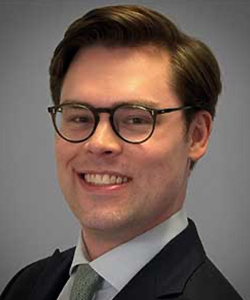
Tell us about your journey to pain medicine and what initially drew you to the field.
Anesthesiology was the most interesting specialty I saw in medical school. I found pain medicine second, and it was a combination of being interested in the physiology and medicines, having the instant gratification of interventional procedures, and probably most importantly finding role models in chronic pain who I wanted to emulate.
When did you decide to pursue pain fellowship, and what experiences during residency helped shape that decision?
I decided early in CA-2 year after exposure to both outpatient pain clinic and regional anesthesia. I tremendously looked up to the regional and pain faculty in my residency at the University of Michigan, and deciding between the two subspecialties was very difficult. When I saw some chronic pain faculty also covering the acute pain service and doing regional anesthesia beyond the clinic, I decided on a chronic pain fellowship because that was the exact job I wanted out of training.
What did you learn about the fellowship application process that you wish you had known as a resident?
I applied and interviewed before the pandemic, so the process was hugely different from how it is today. Online interviews and program signaling didn’t exist then. I think today, even more so than when I applied, it is important to be selective and even picky when deciding where to apply. Different fellowships can vary widely, and applicants will find some to be great fits while others aren’t. Knowing what you want in a fellowship—interventional vs more medication-focused, more hands-on vs didactic-based training styles—will help applicants apply to programs that fit them best.
What factors were most important to you when choosing a pain fellowship program?
I went to medical school and residency at the University of Michigan, which I adored. After 8 years at the same institution, I thought I needed to go somewhere else for different perspectives and approaches. I found the Tri-Institutional Fellowship at Weill Cornell, Memorial Sloan Kettering Cancer Center (MSKCC), and Hospital for Special Surgery, which offered three perspectives in one year of training.
What was your fellowship experience like, and was it different from what you expected?
It was fantastic. A fire hose experience for sure. Three institutions in a year, of course, meant one every four months. Add to that the steep learning curve that every pain fellowship has: learning the intricacies of an outpatient clinic, PO medications, imaging review, anatomy, diagnosis, physical exam, procedures, etc. At the risk of sounding like an advertisement, the Tri-Institutional fellowship was exactly what I had hoped it would be.
Were there particular mentors, experiences, or lessons during fellowship that had a lasting impact on your career?
Absolutely. I could name just about every attending in the Tri-Institutional Fellowship as having an impact on how I manage my clinic and take care of patients. Of course, I have to highlight the fellowship program director, Dr. Gulati, who helped me with just about everything when I started at MSKCC out of fellowship.
What was the most challenging aspect of fellowship, and how did you navigate it?
I think learning how to manage an outpatient clinic was the most difficult. Coming from anesthesiology, I was used to inpatient medicine. If I was worried about a patient, I just saw them again immediately in the PACU or ICU. Even deciding to see a clinic patient back in a week, month, or year was unexpectedly challenging because providing care from a distance was totally new to me. The best solution was to work in a variety of clinics to see how each attending managed follow-ups, phone calls, portal messages, and emergencies to see what clinic style fit me best.
Now that you are a few years into practice, what aspects of your fellowship training do you find yourself relying on most?
Working well in a team remains hugely important. The team here includes spine surgery, neurology, rheumatology, endocrinology, and primary care. Taking the time to confirm the diagnosis by doing your own history, physical, and imaging review is also critical, just like every attending promised it would be.
How did you decide what type of practice or career path you wanted to pursue after fellowship?
I first wanted a mixed job with operating room (OR) anesthesia, regional anesthesia, and a chronic pain clinic. That combination was fantastic for years after graduating, but I found myself thinking that focusing on just one would be better for me personally. When HSS offered me a position for just interventional pain, I jumped at the opportunity. I miss the OR and regional, but picking one focus has been the right decision for me.
For residents interested in pain medicine, what experiences or skills would you recommend developing before applying?
My most important advice is to spend time within pain medicine. Be in the clinic and procedure room as much as possible to see if this is the right field for you before dedicating yourself to a year-long fellowship. Find attendings whose work you can see yourself enjoying and reach out for mentorship. Once you’re sure about pain medicine, plan for what you think the most difficult part of fellowship will be. If it’s procedures, practice ultrasound and fluoroscopy techniques. If it’s diagnosis, practice physical exam and imaging review. Give yourself the best chance of hitting the ground running when fellowship begins because it’s only one year!
For trainees from backgrounds outside of anesthesiology, like physical medicine and rehabilitation (PM&R), emergency room (ER), neurology, or family medicine, what advice would you offer about finding mentors, navigating the field, and pursuing pain medicine fellowship?
Beyond all the above advice, whenever I work with non-anesthesia fellows, I expect them to have a strong foundation in their residency specialty. I don’t expect to teach a PM&R-trained fellow how to do a shoulder or knee injection; rather, I hope they can teach me new methods. The same goes for crisis management with ER and localizing lesions with neurology. I recommend focusing on what your specific field adds to pain medicine and trusting the fellowship will give you anesthesiology-specific skills like epidurals and nerve blocks.
Looking back, what is one piece of advice you wish you could give yourself at the beginning of your pain medicine journey?
I’d tell myself to lean on mentorship even more. Pain medicine is such a departure from traditional anesthesiology that it can’t be learned in just a year. It sounds trite, but accept that there will always be situations you haven’t seen before so ask as many questions as you can and see as big a variety of practice styles as possible.