ASRA Pain Medicine Diversity SIG: Pain Fellowship Pathways Interview with Dr. Christine Ogbeide
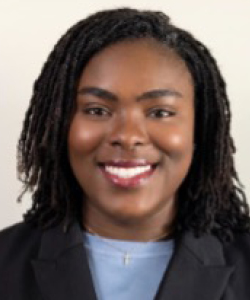
In this interview, Dr. Luigi Gonzales talks with Dr. Christine Ogbeide about her path to pain medicine.
Luigi Gonzales, MD (LG): Hello Dr. Ogbeide. Thanks for taking the time to do this interview. I’m sure our audience will really appreciate your insight! First question: At what stage of your education did you know that you wanted to pursue a career in pain medicine?
Christine Ogbeide, MD (CO): As a second-year medical student during my physical medicine and rehabilitation rotation, I spent a day with an interventionalist performing a radiofrequency ablation and a lumbar epidural steroid injection (ESI). I was fascinated by the work and expressed my interest, and I remember him advising me: “Make sure you like clinic before deciding on this, because it’s not just procedures.” I shadowed him in clinic soon after and loved every minute of it. From that day on, I knew I wanted to pursue pain medicine.
LG: That’s a good point. I know a lot of us see procedures as the focus of pain medicine, but the time we spend in clinic talking to patients is often understated. Was there a specific encounter that you had during your residency that stands out and confirmed your passion for pain medicine?
CO: I cared for a new cervical spinal cord injury patient on the inpatient rehab unit who was very distrustful of the medical system. They were on a high morphine milligram equivalent regimen and initially hesitant to try nonopioid strategies. By taking time to establish rapport and earn their trust, I worked with them to create a gradual titration and comprehensive pain management plan that effectively controlled their pain. When it was time for discharge, they handed me a thoughtful, handwritten card. It was a touching moment that highlighted the profound impact of empathetic, personalized pain care.
LG: Patient interactions like that where you make such a big impact always stick with you! What are some of the things that go through your mind when seeing a new patient coming into the pain clinic?
CO: Every patient’s pain is unique and deserves its own personalized blueprint. I evaluate their mobility, mood, daily routine, and social support system, and categorize the underlying mechanism (whether it's visceral, neuropathic, or nociceptive) to create a tailored treatment plan.
LG: For our audience who are still in training or in the very early stages of training, including myself, what is some uncommon advice that you think trainees who are interested in pain medicine should hear?
CO: Make sure you genuinely love the clinic and the long-term patient relationship aspect, not just the procedural suite. Procedures are only a small fraction of a patient’s total care. If you can’t find fulfillment in the diagnostic puzzle, the multidisciplinary management, and the honest, sometimes difficult conversations in clinic, you'll burn out quickly.
LG: Amazing! I know they always say you should see if you like every aspect of the job, not just the best parts! In terms of ASRA Pain Medicine, how has the Society contributed to your path to becoming a pain medicine physician?
CO: ASRA Pain Medicine provided me with invaluable access to mentorship and a community of like-minded physicians early in my training. Connecting with leaders and mentors in the field helped me envision my future career path.
LG: I agree, I think ASRA Pain Medicine is a great way to connect with everyone interested in pain. It’s a great way to increase your exposure and connect with potential mentors! Okay, now let’s have some fun and do some rapid-fire questions:
- Favorite ice cream flavor: Cotton candy
- Favorite muscle: Triceps
- Messi or Ronaldo: neither – Marta!
- Favorite procedure: Caudal ESI
- Favorite memory of residency: Becoming a mother to my daughter and marrying my best friend
LG: Awesome answers! Thank you again for taking the time to do this interview. We all really appreciate it! There you have it, ASRA Pain Medicine, a closer look into the path of one of our Pain Medicine Fellows!
Dr. Ogbeide is a pain medicine fellow at the University of Washington (UW) in Seattle. She completed her physical medicine and rehabilitation residency training at UW Medicine, her MD from The Ohio State University College of Medicine, and her undergraduate degree from the University of California, Berkeley. Her clinical and academic interests focus on interventional pain management, comprehensive spine care, acute and chronic pain management, and optimizing functional outcomes for her patients.
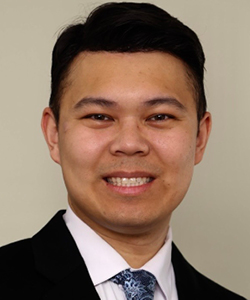
Dr. Luigi Gonzales is a PGY-2 PM&R resident at the University of Washington in Seattle. He obtained his undergraduate degree from the University of Southern California and attended the University of California, Irvine School of Medicine where he was first exposed to pain medicine. His clinical and academic interests include interventional spine care, cancer pain, and technology integration in pain management. Outside of work, Luigi loves to play sports including basketball, volleyball, tennis, and golf.