Interview with Bryant Tran, MD
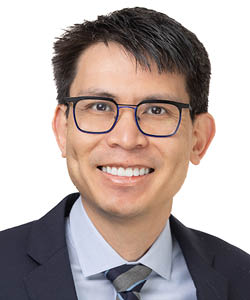 Can you tell us your name, where you work, and your current leadership roles at your home institution and other societies?
My name is Bryant Tran, and I am an anesthesiologist at the University of North Carolina at Chapel Hill. I serve as the regional fellowship program director. I enjoy a mix of different roles with ASRA Pain Medicine and also participate in initiatives with the Society for the Advancement of Transplant Anesthesia (SATA) and the American Board of Anesthesiologists (ABA).
May is Asian American, Native Hawaiian, and Pacific Islander (AANHPI) Heritage Month. How do you celebrate during this month?
I use this month as an opportunity to teach my children about their family and the values that we cherish. My parents escaped from Vietnam after its government was overthrown in the 1970s. I was born in the 1980s as an American, and so I have a special shared experience with other Vietnamese-Americans in both culture and upbringing. For my children, I keep things simple and positive, so teaching comes in the form of trying new foods that celebrate our past and present and in family gatherings that celebrate our community.
Why do you think it’s important to recognize and celebrate AANHPI Heritage Month?
Technology has made us more easily accessible to each other through social media, texting, and video conferencing, but ironically, it can also make us feel more isolated. Recognizing AANHPI Heritage Month motivates me to reach out to my loved ones in a more meaningful way, to maintain connection.
ASRA Pain Medicine members are interested in regional anesthesiology and pain medicine-related topics. Please tell us more about your research, education, or advocacy in this area.
I have had a variety of research projects in my career, but I am most proud of those that foster scholarly conversation. At the most informal level, we see this conversation through social media interactions with each other; this keeps us connected while putting these interactions on display for other interested parties to read and learn. In a live format, I have a dedicated team with ASRA Pain Medicine that hosts the Journal Club Roundtable, a virtual discussion hour featuring up-to-date publications. Many times, the authors of the papers attend these sessions, and I believe this adds a whole new dimension to any journal club forum. Lastly, I enjoy writing letters to the editor, which add to journal content and support scholarly and professional debate. These letters have low value on the academic currency scale, but for me, these works have a great impact on my ability to launch discussions when I teach residents and fellows on the fly.
What challenges have you faced on your journey so far as a physician and anesthesiologist? How did you overcome them?
Because of my quiet and unassuming demeanor, I have been overlooked many times when applying for various opportunities. I have overcome this challenge by focusing on my strengths, particularly my motivation to be present and reliable. A small gesture, such as attending a meeting in person or replying to an email promptly and thoughtfully, goes a long way, especially when done consistently over time.
Why is equity and inclusion important in medicine and in regional anesthesia and pain medicine?
This is a tricky and sensitive subject, given the differing points of view in our country. Ultimately, most of us want the same thing: for all parties to be valued and heard. Equity and inclusion are important because we are such an incredibly diverse community.
Who has served as an inspiration in your life?
My father, who is selfless, never complains and has experienced hardships that I will never know the full extent of. My mother, who shows compassion that carries our whole family.
What career accomplishment makes you most proud?
Being selected for a regional fellowship was a life-changing event that made me proud. The rush I felt when receiving that offer letter was unforgettable.
What advice would you give to young physicians and trainees as they navigate their careers?
The younger generations are being bombarded with negativity in the news, and algorithmic social media feeds this content. To overcome this, I would encourage them to foster a positive, nurturing support system.
Is there anything else you would like to note?
I am thankful for the career connections I have made through ASRA Pain Medicine and hope my contributions will help engage and support those searching for them.
Bryant Tran, MD, is an associate professor of anesthesiology at the University of North Carolina at Chapel Hill. He completed his medical degree at Wake Forest University in Winston-Salem, NC, an anesthesiology residency at the University of Virginia at Charlottesville, and a fellowship in regional anesthesiology and acute medicine at Stanford University in Stanford, CA. Dr. Tran is board-certified by the American Board of Anesthesiology and the National Board of Echocardiography. He is a question writer for the American Board of Anesthesiology and serves as a peer reviewer for 12 medical journals, including Regional Anesthesia & Pain Medicine, Anesthesia & Analgesia Practice, and the Journal of Cardiothoracic and Vascular Anesthesia. Dr. Tran was the principal investigator of a randomized clinical trial assessing the use of music streaming services and noise-canceling earphone technology for patients undergoing total knee replacement surgery.