A Growing Sense of Where I Belong
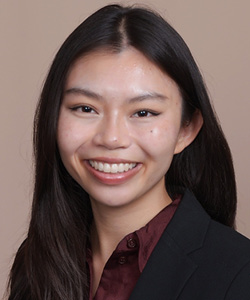 I grew up in a household where sacrifice was the quiet language of love. As the daughter of Vietnamese refugees, I was raised on stories not often spoken, but lived through early mornings, long workdays, and the careful calculus of every dollar. Education was never framed as a choice but as both a privilege and an obligation. Medicine was deeply personal to my family. My father trained as a physician in Vietnam and, after escaping by boat, continued to care for others in a refugee camp in Malaysia—practicing not with abundance, but with whatever was available. By the time I was born in the United States, that chapter had passed, but its imprint remained. Medicine, in that context, was not about prestige or security but about service, resilience, and survival. For me, it has become something more layered: a space where identity, responsibility, and purpose converge.
As an Asian American and Pacific Islander (AAPI) trainee, I have often existed in a space of contradiction—visible yet not fully seen. The label suggests representation but obscures the diversity within it: histories of displacement, cultural nuance, and a spectrum of socioeconomic realities. I felt the quiet weight of assumptions—that I would be capable, self-sufficient, and above all, silent. For a long time, I tried to embody that ideal. I worked hard, kept my head down, and hesitated to ask for more, believing that competence alone would be enough.
It wasn’t.
The inflection point in my training was not a singular achievement, but a shift in how I understood my place in medicine. In a research meeting, Dr. Senthil Sadhasivam asked a question I had never been asked: What can I do for you? It unsettled me. I did not know how to answer. No one had taught me to name what I needed—much less to expect that someone in authority would want to meet me there. In that moment, mentorship was redefined—not as something to receive passively, but as an active, reciprocal investment in growth. Over time, he taught me that advocating for myself is not a sign of inadequacy, but of clarity—that asking for “too much” is often just asking for what I need to become who I am capable of being.
That lesson was deepened by mentors who did more than guide—they created possibility. Drs. Uchenna Umeh and Lisa Doan recognized my potential. Within pain anesthesia, they extended opportunities and supported me through the uncertainty of anesthesia residency applications with a generosity that felt both grounding and rare. Dr. Grace Lim similarly altered the trajectory of my training—not only by involving me in meaningful scholarly work, but by advocating for me in spaces I had not yet accessed. When she reached out to colleagues on my behalf, it was more than professional support; it was a quiet affirmation that I belonged in those rooms.
...sometimes, what patients need most is not more explanation, but the space to be heard.
In anesthesia, particularly in regional anesthesia, I found a field that reflects how I move through the world. There is an intentional stillness to it: the careful mapping of anatomy, the precision of ultrasound guidance, the responsibility of intervening exactly where pain begins. Beyond technical mastery, what draws me most is the trust embedded in each encounter. Patients meet us in moments of vulnerability, often within minutes of placing their care in our hands. In those moments, presence matters as much as precision.
My cultural background shapes how I hold that responsibility. Growing up, I watched my family navigate a healthcare system that was technically accessible, yet often out of reach—where language barriers, cultural deference, and unspoken fears created quiet distance from care. I learned early to recognize the difference between agreement and understanding, between silence and comfort. Now, I carry that awareness into every patient interaction. I take the extra moment. I ask the second question. I sit in the pause. Because sometimes, what patients need most is not more explanation, but the space to be heard.
The parts of you shaped by your culture, your family, your history are not liabilities to overcome, but strengths to draw from.
As I look ahead, I think less about representation as a number and more about belonging as practice. Creating environments where trainees feel both supported and seen requires more than presence—it requires intentional mentorship, active advocacy, and a willingness to recognize the complexity within identity. For AAPI trainees, this means ensuring that no one feels invisible within a category meant to include them.
To those who follow, I would offer this: you do not need to make yourself smaller to succeed in medicine. The parts of you shaped by your culture, your family, your history are not liabilities to overcome, but strengths to draw from. Your voice may feel uncertain at first. Mine did too. But it strengthens each time you choose to use it.
Medicine has given me the tools to care for others and the language to understand myself. In every patient I meet, I am reminded that this work is not only about alleviating pain—it is about presence, trust, and the quiet privilege of being invited into someone else’s vulnerability. In that space, I carry not only my training, but the legacy of where I come from—and a growing sense of where I belong.
Laura Le is a graduating medical student at the University of Pittsburgh School of Medicine (UPSOM) in Pittsburgh, PA, and an incoming anesthesiology resident in New York City, with interests in regional and obstetric anesthesia. Raised in a tight-knit family of Vietnamese refugees near Little Saigon, CA, she brings a perspective grounded in resilience, cultural humility, and patient-centered care. Her work includes leadership roles in the American Women’s Medical Association, the Pitt Med Student Mentorship Alliance, and APAMSA; mentoring local high school students through the American Society of Anesthesiologists mentorship efforts; volunteering at UPSOM’s eye clinic; and biotech experience in late-stage registrational trials at Genentech. Her anesthesia research has been recognized in the Young Investigators Contest at the 2025 Post-Graduate Assembly meeting. Outside of medicine, she enjoys traveling, movies, and live music.