Interview with the 2026 Gaston Labat Award Recipient: André P. Boezaart
Cite as: Blessing M. Interview with the 2026 Gaston Labat Award Recipient: André P. Boezaart. ASRA Pain Medicine News 2026;51. https://doi.org/10.52211/asra050126.004.
ASRA Pain Medicine has awarded André P. Boezaart, MD, PhD, MBChB, MPraxMed, DA(CMSA), FFA(CMSA), 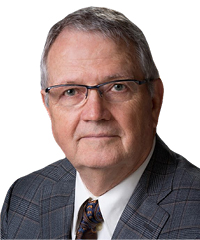 MMed(Anesth), FASRA, with the prestigious 2026 Gaston Labat Award. Dr. Boezaart is a professor emeritus of anesthesiology, pain medicine, and orthopaedic surgery at the University of Florida (UF) College of Medicine in Gainesville.
Marcelle Blessing: You are recognized as an exceptional leader and researcher in regional anesthesia and acute pain medicine. Can you outline your journey? What personal qualities or characteristics have been most important along the way, and how did you decide to focus on regional anesthesia?
André P. Boezaart: I didn’t choose regional anesthesia and acute pain medicine—they chose me.
In 1975, I was conscripted into the South African Defense Force and assigned as the sole anesthesiologist, barely trained, to an abandoned mission hospital on the Angolan frontline. Young soldiers with shattered hands from self-inflicted gunshot wounds to escape the horrors of war needed daily debridements. Our GA equipment was primitive, and single-shot axillary blocks failed on repeat. So, my mentor, Colonel Tony Dippenaar, and I improvised: Through a small incision, we threaded a central venous catheter alongside the axillary artery under direct vision. We didn’t know it at the time, but we had created what were likely the earliest continuous peripheral nerve blocks. Because the war was classified Top Secret, we couldn’t publish until decades later—and it took discovering Miguel Reina’s microanatomical atlas in 2017 to finally understand, on a structural basis, why those wartime catheters worked so reliably.
That pattern—necessity drives innovation; failure drives understanding—has defined every chapter since. A dural puncture on a VIP’s daughter, resolved instantly with citrated stored blood, led me to question the entire mechanism of postdural puncture headache (PDPH) and eventually to explore and use the suprazygomatic pterygopalatine ganglion block as an alternative to epidural blood patch. Secondary block failures in the early 1990s led to the development of the stimulating catheter. “Burning arm syndrome” after continuous interscalene blocks pushed us toward the posterior approach and the continuous catheter paravertebral block. A 20% thoracic epidural failure rate—which I blamed on trainees until my own failed at the same rate—drove further catheter development to using stimulating catheters for epidurals, decreasing the epidural failure rate to close to zero. Nearly every meaningful step forward began with something going wrong and a willingness to sit with that discomfort rather than explain it away.
Along the way, a nasal cannula we jury-rigged for capnography during early ophthalmic regional cases—one prong for oxygen, one for CO₂ monitoring—became the divided nasal cannula now used worldwide. I didn’t patent it. Hard lesson, but proof that the best innovations come from clinical need, not the lab.
More recently, my focus has broadened from nerve blocks to what I believe acute pain medicine must become: a systems-based specialty integrating continuous analgesia, neuromodulation, and cross-specialty collaboration to minimize opioid use—reflected in the PFCC program with Hari Parvataneni at UF and the Cancer and Palliative Pain Care Collaborative with Steve Vose.
The single thread across 50 years is the lesson I learned in Angola: Progress comes not from defending what we think we know, but from the discomfort of realizing we were wrong.
MB: Please tell us about the role mentors have played in your career path. How have they impacted your career?
AB: Without my mentors, there’d be no career to speak of, and the most important ones didn’t hand me answers; they handed me questions.
Colonel Tony Dippenaar was my commanding officer on the Angolan frontline in 1975. One day, he looked up over his mask and said, “André, stop staring at the wound and focus on the patient.” That single sentence reoriented everything I would go on to do. It was also Dippenaar who, faced with soldiers needing daily debridements, asked whether we could thread a catheter next to the axillary artery, leading to the earliest continuous peripheral nerve blocks—not telling me how, just planting the question. That’s what the best mentors do: They trust you with a problem before you trust yourself.
Dr. Dan Reitz, a small-town general practitioner in South Africa, gave equally lasting advice when I was still a medical student: “The patient will tell you exactly what’s wrong. All you have to do is listen.” Decades later, I still catch myself about to interrupt, and I hear Dan’s voice.
Progress comes not from defending what we think we know, but from the discomfort of realizing we were wrong.
Professor Hugh van Hasselt at Wits set the terms of our relationship on day one: “We are colleagues. I learn from you, and you learn from me.” That principle—that mentorship flows in both directions—became the model for every teaching relationship I’ve had since. Together, we invented the anesthetic telephone for inducing anesthesia in preschool children, but what he really taught me was that hierarchy and learning are poor companions.
Daniel Moore’s 1967 textbook, Regional Block, was my only clinical guide in a war zone. I carried it everywhere. Years later, I had the privilege of befriending him, and he inscribed one of my own books with Churchill’s words: “Writing a book is an adventure —to begin with it is a toy and an amusement, then it becomes a mistress, then a master, then a tyrant.” Anyone who has written one knows exactly what he meant.
I should mention Dr. Alon Winnie, whom I was privileged to count as a mentor—but I’ll say more about him in a later question because his story is inseparable from one of my greatest regrets.
Finally, mentorship from below has shaped me as much as mentorship from above. A junior colleague once challenged me to look at my own thoracic epidural failure rate rather than blaming trainees. The data proved him right. That moment of discomfort changed how I teach and how I practice.
The thread connecting all of these people is the same: None of them made me feel more certain. Every one of them made me more comfortable with uncertainty.
MB: Please describe a personal challenge you faced and how you overcame it.
AB: The hardest challenge wasn’t clinical. It was deciding to leave behind the country I loved and a career that was working perfectly well to chase one that didn’t yet exist.
By the early 1990s, I had a thriving private practice in South Africa, primarily focused on critical care medicine and working with the sickest of the sick. My PhD under Professor André Coetzee focused on cerebral blood flow during induced hypotension—serious academic work in a country with genuinely strong programs in cardiac anesthesia and critical care medicine—largely due to the immense influence of André Coetzee. My family was settled. The income was good. There was no rational reason to leave.
But regional anesthesia and acute pain medicine had found me—starting in Angola, continuing through the stimulating catheter, and every failed block that taught me something. The problem was that South Africa had almost no academic infrastructure for regional anesthesia and acute pain medicine, and still doesn’t have any. And the fee-for-service private practice model troubled me. I saw its promotion of over-serving on a daily basis, and I struggled to reconcile that with the kind of medicine I wanted to practice. I had this growing conviction that acute pain medicine needed to become something much larger than nerve blocks—a systems-based specialty built on teaching, research, and genuinely collaborative patient care—but there was no home for that vision where I was.
So what did leaving actually mean? It meant uprooting myself and my wife, leaving my almost-adult children behind, walking away from financial security, and starting over in a country where nobody knew who I was. It also meant admitting to myself that the career I’d built, successful as it was, wasn’t the one I was meant to have. That’s a hard thing to say out loud, let alone act on.
I got through it by saying yes when the right doors opened. Mike Todd—my external PhD promoter and then editor-in-chief of Anesthesiology—and David Brown, then chair of anesthesia and editor-in-chief of Regional Anesthesia & Pain Medicine (RAPM), offered me a faculty position at the University of Iowa. Later, Nic Gravenstein brought me to the University of Florida. Those moves gave me the academic home I’d been searching for and the freedom to pursue regional anesthesia and acute pain medicine.
As you look back, has there been a defining moment in your career? If so, can you describe it?
AB: There were many—my early interactions with Dr. Dan Reitz before I even started medical school in the 1960s, the experiences in Angola in 1975—but if I had to trace the single thread that connects them all, it runs through my PhD.
I was doing it part-time at the University of Stellenbosch while in private practice and reached a point where I seriously wanted to quit. I couldn’t see how all that effort would make any real difference in my life. André Coetzee talked me off the ledge. He said the PhD would open doors I didn’t even know existed, and he was so right. It put me in touch with people like Mike Todd. The animal laboratory work in Coetzee’s lab at Stellenbosch gave me the skills and confidence to later conduct the PDPH pig study, which fundamentally changed everything I believed about postdural puncture headaches. I published that work in RAPM with David Brown, and it opened the door to the University of Iowa. One thing led to the next in a chain I could never have planned.
But if you force me to name a single moment, it was the day I decided to leave my beloved South Africa and immigrate to the United States to join the faculty at Iowa. That decision changed everything. It gave me the academic environment, the colleagues, and the freedom to pursue, first disguised as “orthopaedic anesthesia,” and later as regional anesthesia and acute pain medicine, in a way that simply wasn’t possible back home.
And here’s the thing—everything that followed traces back to that leap. The stimulating catheters, the microanatomical work with Miguel Reina, the PFCC and CPPCC programs at UF, and eventually standing at a podium to deliver the Gaston Labat Lecture—none of it happens if I stay put. None of it happens if Prof. Coetzee doesn’t convince a frustrated PhD student to keep going rather than quit.
MB: What has been your most rewarding accomplishment?
AB: You might expect me to say the Gaston Labat Award—and don’t get me wrong, I view it as the pinnacle recognition of my career. The Buckenmaier Trailblazer Award, the Haven Perkins Lifetime Teaching Award, and others mean a great deal to me, too. But honestly, all of them are dwarfed by something else entirely.
The most rewarding thing I can point to is the people. When I look at the careers of residents, fellows, and junior faculty who have crossed my path—Steve Borene, Big-John Edwards, Monika Nanda, Nabil Elkassabany, Linda Le-Wendling, Steve Vose, Yury Zasimovich, Kiki Nin, Barys Ihnatsenka, René Przkora, Sanjeev Kumar, Svetlana Chembrovich, Cameron Smith, Patrick Tighe, Richa Wardhan, Anna Server, and current giants like Dé Tran and Peter van der Putte, among many others—I can’t help but marvel at what they’ve built. I obviously can’t claim any glory in their achievements, but I like to think I played some small role somewhere along the way.
And here’s the part that matters most: Every single one of them surpassed me. That’s not false modesty—it’s the whole point. That’s the best any teacher or mentor can hope for, and it’s the most rewarding accomplishment I can imagine.
MB: What keeps you inspired?
AB: First, my collaboration with Miguel Reina and Graeme McLeod, along with our teams in Spain, Scotland, Florida, and Argentina. We’ve published over 80 papers since my “retirement” from UF in 2019—mostly unraveling the microanatomy of peripheral nerves, exploring ultra-high-definition ultrasound capable of visualizing the circumneural membranes and spaces that regular clinical ultrasound cannot, and studying nerve electrical function. That work is very exciting.
Second, mentorship hasn’t stopped. I’m still involved in formal and informal mentoring of colleagues around the world—and most personally with my own grandson, Dihan van Niekerk, who is pursuing a career in neurophysiology. It’s a subject I know a little about, but he’s already operating well beyond my level. Watching that unfold is a different kind of inspiration entirely.
Third, my involvement with Yōjō Health, a wellness company focused on transcutaneous auricular vagus nerve stimulation (taVNS) with a strong feedback loop through an interactive app. It’s fascinating work that consumes much of my time and creative energy, and it’s done with a highly talented team. I believe wellness and electrotherapy will be the buzzwords of the future—not entirely replacing pharmacotherapy, but significantly competing with it. Implementation of taVNS is already making an impact in primary headache disorders, depression and anxiety, cardiac and autonomic regulation, post-stroke rehabilitation, and other chronic pain conditions, and the list grows daily. It will become a key player in pain medicine in the near future.
MB: What are you up to lately?
AB: Much the same as what keeps me inspired—the microanatomical, ultra-high definition ultrasound, and spread of LA through tissue research with Reina and McLeod, mentoring colleagues and trainees, and the Yōjō Health work on taVNS and wellness.
But the things I’m working hardest at right now have nothing to do with medicine. I’m trying my very best to be a better husband and grandfather than I was a husband and father. And I’m trying to get into the African bush more often—there’s no better place to cleanse the soul.
MB: How has involvement in ASRA Pain Medicine contributed to your success?
AB: It was my involvement with the journal RAPM as much as with ASRA Pain Medicine itself that influenced my career. The journal gave me a platform to publish, to review, and eventually to serve as executive editor—work I’ve always seen as protecting the public against science that doesn’t hold up, even though editing and reviewing manuscripts are thankless tasks with few (if any) privileges.
My relationship with the organization has been more of a marriage than a romance—complete with rough patches. I was so passionate about what was best for patients that I sometimes came across as harsh, particularly when I challenged prominent figures—never personally, but what they were advocating. And it did not go over well. That limited my invitations to speak at ASRA Pain Medicine conferences. I crossed swords with important society voices on issues like extended-release epidural morphine (EREM), liposomal bupivacaine, “how close is close enough,” and many others.
In my more mature years, I learned to calm down the delivery, though not the conviction. I realized that flawed ideas will eventually collapse under their own weight if you give them enough time—as EREM did. What I could never bring myself to do was stay quiet when, although these ideas eventually killed themselves, they harmed patients.
Today, the marriage is on very stable footing, and I’m working hard to spread ASRA Pain Medicine’s message globally. But we have a very long way to go. I recently had a shattered complex patella fracture open reduction and internal fixation (ORIF) myself—without regional anesthesia, under GA with tramadol and paracetamol, very little analgesia, and 10 days of opioid-induced constipation postoperatively. My poor surgeon struggled to reduce my fracture with no help from the rest of the team. He had to fight the quads to reduce the fracture entirely on his own, resulting in a poor ORIF. That experience in late 2025 tells you everything about how far acute pain medicine still has to go.
The lessons I learned from the organization — good and bad, comfortable and uncomfortable — had a big influence on who I am. I owe ASRA Pain Medicine a great deal, rough patches and all. But we still face a long journey from relying on blocking nerves and ever-increasing doses of opioids, again disguised as multimodal analgesia, as a solution for replacing acute pain medicine with simple blocks and version 2.0 of the opioid crisis. Our goal is to establish a widely supported and well-understood subspecialty of acute pain medicine.
MB: Which publication of yours are you most proud of?
AB: Difficult question—and the answer is bittersweet.
My most-cited paper is the one I’m proudest of, but it’s widely cited for the wrong reason. The study was about optimizing the surgical field under normotensive conditions: We slightly decreased cardiac output with esmolol—later isoflurane, after reports of severe brain injuries with accidental esmolol overdoses—to reduce blood flow to the tissue, then reduced flow through the tissue with phenylephrine, while maintaining normal blood pressure and cerebral perfusion. The brain’s vasculature has very few alpha receptors. This was our answer to the “hypotensive anesthesia” debate: Don’t lower blood pressure—manipulate the physiology. It gave surgeons an almost bloodless field without ever threatening the brain. One surgeon called it “cadaveric conditions” and was surprised to find the patient very much alive with a completely normal blood pressure.
But what got cited wasn’t the technique. It was the scale we used to measure surgical field quality, which became widely known as the Boezaart scale. Hundreds of researchers across all surgical specialties adopted the scale, and almost no one paid attention to the pharmacological manipulation behind it. We used it very successfully for decades in plastic, ENT, shoulder, and other surgeries. I still find it sad that so few people understood or applied the actual technique.
Two other publications I am equally proud of received similarly little attention. The anesthetic telephone transformed the approach from restraining a terrified child with a mask to having a happy toddler listen to a recorded story through a toy phone while sevoflurane flowed through the mouthpiece. Our pig study on PDPH—cisternal punctures with laser Doppler flowmetry demonstrating cortical (dural) blood flow doubling after 0.3 mL/kg CSF withdrawal, then returning to normal after blood injection epidurally 50 cm caudad, challenged the entire “plugging the hole” theory. This research showed that iatrogenic peridural hematoma is a strong trigger for cortical vasoconstriction and suggested that the pathophysiology of PDPH is likely similar to that of primary headache disorders. Ultimately, it led us to explore and successfully use ultrasound-guided suprazygomatic pterygopalatine ganglion blocks as an alternative to epidural blood patches.
I console myself with the thought that these concepts were probably years ahead of their time. Most of my other publications received some attention—these three didn’t, and they’re the ones I’m proudest of.
MB: Where do you see the most potential for future research in regional anesthesia and pain medicine?
AB: Certainly not in finding more weird and wonderful ways to block nerves. We know where nerves are—the macro-anatomy, the sonoanatomy, and increasingly the micro- and ultra-anatomy. We know how to identify them and block them effectively and safely. That chapter is largely written.
The real potential lies in redefining what acute pain medicine actually is. We need to challenge long-held beliefs—that postdural puncture headache is about “plugging holes,” that intraneural extrafascicular injections are necessarily inherently dangerous —and we need to accept that nerve blocks and regional anesthesia alone are not enough. The field must evolve into a systems-based specialty that collaborates with surgeons and other experts, integrating continuous pain management, neuromodulation, rehabilitation, opioid reduction, and a much deeper understanding of autonomic and inflammatory mechanisms.
Progress will never come from defending what we think we know or clinging to dogma. It comes from the discomfort of realizing we were wrong—and the discipline to adopt, adapt, and improve.
MB: Do you have any regrets?
AB: Yes, a few.
I never protected the intellectual property of the divided cannula I presented at the SASA congress in 1994. There is not a single RA or MAC case performed today without a divided cannula. That was a missed opportunity—but the bigger lesson was about what happens when invention and commerce become entangled, as I later discovered with the stimulating catheter.
Everything I said and wrote about stimulating catheters in the late 1990s and early 2000s was viewed skeptically because the manufacturer paid me a royalty. The truth is, I never wanted that arrangement. All I wanted was to make the technology available to patients because I believed then—and still do—that it is the only reliable way to confirm catheter placement in the subcircumneural space for continuous nerve blocks, prevent secondary block failure and collateral damage from blocking unwanted nerves like the phrenic, and verify true epidural space placement for thoracic epidurals. I accepted a minimal royalty at the company’s insistence, and it followed me into every disclosure and every skeptic’s footnote. More patients would have benefited from the technology if I had not accepted it.
But my greatest regret runs deeper than any of that.
Dr. Alon Winnie, one of my most revered mentors, told me late in his life that the most meaningful contribution he had ever made to medicine was the Winnie Biologic Pump. He asked me to carry it on. The idea was elegant: harvest chromaffin cells from the adrenal medulla, grow them in culture, and inject them into the cerebrospinal fluid through a lumbar puncture. The cells attach to the arachnoid mater and produce endorphins and stress hormones, acting like intrathecal morphine without the side effects. He published a small series in Anesthesiology in 1993, and every patient with terminal cancer in that group was able to stop using external opioids and ultimately died pain-free.
The plan was to conduct a cohort study followed by a large randomized controlled trial, using mass-produced animal chromaffin cells to help millions suffering from cancer and severe pain. I didn’t have the opportunity to pursue this. It wasn’t just a project. It was an entire career’s worth of work, and I don’t have enough time left to do it.
My deepest wish is that some bright young scientist takes up the Winnie Biologic Pump and advances it. Those 360 million patients who die annually with hideous cancer pain deserve it.
MB: Do you have advice for current trainees or early-career professionals seeking to conduct research in regional anesthesia?
AB: Ask one relevant question at a time and focus on that question with your research project. Don’t try to solve everything in one study. Once you’ve answered it—even if the answer isn’t what you hoped for—move on to the next one. The best research careers are built one clear question at a time, not through one grand theory.
Early on, find experienced researchers who are passionate mentors—people motivated by your growth, not by adding another name to a paper. You can spot them quickly: The good ones ask about your ideas before sharing their own.
Be open to being wrong. Some of the most important steps forward in my career came from mistakes, failed attempts, and assumptions that didn’t survive scrutiny. If your results make you a little uncomfortable, you’re probably asking the right questions. And don’t hesitate to challenge conventional wisdom—respectfully, but firmly. If the data shows that a widely accepted idea doesn’t hold up, say so. That’s not arrogance. That’s the whole point of research.
Finally, think beyond nerve blocks. We know how to block nerves. The frontier is in understanding why blocks fail at the microanatomical level, in neuromodulation, and in the autonomic and inflammatory mechanisms behind pain. The important questions now are about integrating acute pain medicine into a true systems-based specialty. That’s where the work is waiting.
MB: Please tell us something about yourself that might surprise us.
AB: I am a professional hunter and an avid wildlife and bird photographer, contributing videos of African bird sounds to the BirdPro app. As you can imagine, I spend as much time as I can in the African wilderness. I also had a private pilot license with the required ratings, including a “bush pilot” rating, which allowed me to fly to these places. For most of the sports I played (squash, tennis, golf, and swimming), I played at an above-average yet very amateur level. I also paid my dues through medical school by playing drums for a 1970s rock band called “Men Alive,”an unknown band, but I earned more money in my second year of medical school than I did 2 years into my first paying job as a doctor. I wonder where I would be today had I changed careers at that stage, as I had considered. But mostly, I’m a very private, shy introvert and a humble person who loves what I do, my family, and the African bush. As one of my residents once said: “You are such a humble guy, sir—but then, you have so many reasons to be humble.” Out of the mouths of babes. Indeed, I do have many reasons to be humble.
I’ll also share something that won’t surprise anyone who knows me but might surprise those who only know my resumé: The most important thing that ever happened to me had nothing to do with medicine. On a dusty road in a small suburb in South Africa, I met a 14-year-old girl. Sixty years later, she is still by my side—happily married for 53 years, still tolerating this other love affair with academic medicine with unwavering love and support, still lovingly caring for our wonderful children and grandchildren. Everything I’ve described in this interview—every invention, every failure, every late night in my study—Karin made possible. That’s not a surprise. That’s simply the truth I don’t say often enough.