Interview with Dr. Meredith Barad
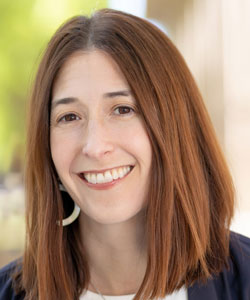 Dr. Meredith Barad is an associate professor of anesthesiology, perioperative and pain medicine at Stanford University, where she co-directs the Orofacial Pain Program and serves as associate division chief of Education as well as program director for the pain medicine fellowship. She is also the immediate past president of the Association of Pain Program Directors (APPD). She serves on the board of the American Interventional Headache Society and the Editorial Board of Pain Medicine.
Christine Gou, MD, a physical medicine & rehabilitation resident physician at Washington University School of Medicine in St. Louis, MO, interviewed Dr. Barad. She serves as co-chair of the Social Media and Website Subcommittee of ASRA Pain Medicine’s Residents and Fellows Committee and is passionate about fostering community in medicine. Through the ASRA Pain Medicine Women in Pain Medicine Interview Series, she highlights the stories and insights of women shaping the field's future.
Christine Gou: You are a neurologist, and it’s relatively uncommon for neurologists to pursue pain medicine. What was your journey into pain medicine like?
Meredith Barad: During my neurology residency, I began to feel that, in addition to helping patients arrive at their diagnoses, I wanted to stay engaged in their care over time. We saw many patients with pain in neurology, but there weren’t many faculty members focused on treating it. So, I reached out to the pain division within anesthesia, and my later mentor and colleague, Dr. Sean Mackey, invited me to spend time with the team. His enthusiasm for treating, managing, and studying pain was infectious. I also did MRI research to understand pain mechanisms, which felt like a perfect intersection between neurology and pain. As for applying to fellowships, I knew theoretically that neurologists could pursue pain fellowships. However, Stanford had never accepted a neurologist, nor had any neurologists applied. When I approached Dr. Mackey about whether my application would be taken seriously, his response was incredibly encouraging. I became the first neurologist to train in the program. Since then, the fellowship has continued to be interdisciplinary, training psychiatrists, radiologists, emergency medicine physicians, osteopathic pain physicians, and, this year, an internal medicine physician.
Gou: As a program director for a pain medicine fellowship, how do you approach teaching fellows who are increasingly coming from diverse primary specialties?
Barad: We have three strategies designed to create a shared foundation. First, we developed an asynchronous “bootcamp” for incoming fellows. It is a series of videos, curated readings, and quizzes that residents can complete during the latter half of their residencies to help them feel more prepared before the fellowship even begins. This bootcamp is free for APPD members who are program directors. Second, we provide comprehensive didactics built from curricula developed by the International Association of the Study of Pain. They take place every Monday and Friday from 7–8 am and are recorded to allow flexibility and review. Fellows also receive a weekly “knowledge nugget” outlining learning opportunities for the week, including required lectures and other educational events across Stanford’s campus, such as multidisciplinary conferences and journal clubs. Finally, we emphasize guided, intentional reading. Each week, fellows receive specific recommendations aligned with upcoming teaching sessions. For example, they may review electromyography and nerve conduction studies in preparation for the upcoming lecture on the topic, and we will provide direct links to curated resources so that they don’t have to waste time searching. This approach breaks down the vast amount of material fellows must master into manageable, bite-sized topics throughout the year.
Gou: You were the immediate past president of the Association of Pain Program Directors. Can you share your experience in medical education?
Barad: My path into medical education leadership was somewhat unexpected. At Stanford, we had a brief succession of two pain program directors who left for personal reasons, and I was asked to step into the role. It wasn’t something I had actively pursued, but it proved to be a good fit. I have always known that I enjoy teaching, am naturally detail-oriented, and like organization. Over time, I learned that a large part of the role involves becoming a good listener and developing the ability to receive and act on feedback. For programs to evolve and meet current needs, listening to trainees and being willing to adapt are critical. Looking back, I think I would have sought out opportunities to develop my skills as an educator more intentionally earlier in training. For residents interested in medical education, I would recommend that as well. Many programs now offer dedicated pathways to build skills in specific areas such as education or research, and engaging in these opportunities can help shape and expand a career.
Gou: How do you interpret the emphasis on procedures among trainees during the fellowship application process?
Barad: Naturally, trainees are excited about procedures, which are hands-on and an important component of the pain management toolkit. Early on, I was also excited about them and thought they would be the solution that could take away pain. Over time, I realized that while procedures can absolutely help some patients, they’re rarely the whole answer. The multidisciplinary approach to pain care is necessary. Like a stool, you need all the legs in place to be balanced and cared for. I’m direct with trainees early in the year, that yes, we do procedures, and they will learn them during the fellowship. I also say that there’s a chance that many procedures today may not be part of their practice over time. Pain medicine evolves quickly, and practices must keep up with both emerging evidence and changing reimbursement models. It’s critical to diversify your skillset to be a truly effective pain physician. I encourage fellows to take the time to understand pain medicine, build strong diagnostic reasoning, and practice psychological and communication skills to help patients navigate complex, chronic conditions. If someone leaves fellowship thinking that pain medicine is only about doing injections, then I feel like I haven’t done my job as an educator. Pain medicine is much broader, and our responsibility is to understand the whole patient and to bring together multiple approaches to care. If fellows leave with that perspective, then I feel like we’ve succeeded.
Gou: What do you enjoy doing outside of medicine? What has work-life balance looked like for you?
Barad: Outside of medicine, my life centers on my family. My teenagers are 17 and 15, and being present for them has always been the most important thing to me. Earlier in my career, when I was a fellow on a research track, I had a toddler at home and was pregnant with my second child. Balancing research, clinical work, and family did become overwhelming, and I realized I needed to make a change. I stepped away from my research path and moved to a 50% appointment. At Stanford, that still represents a substantial workload, essentially what many would consider a full-time schedule. But that structure allowed me to build a career I care about while also being present for my kids during these important years. In many ways, my main “hobby” has been being a mom. After my children graduate from high school, I may take on more at work. Right now, I savor just being there for them when I can.
That said, many women physicians can work full-time. Among friends who manage it well, a common theme seems to be that they’re unapologetic about hiring help and outsourcing tasks such as housework, errands, and other responsibilities. There are only so many hours in the day. If you can outsource the logistical tasks, you can focus on your kids and family. Unless you have a lot of family support nearby, most people need some form of help, and recognizing that is healthy.
Gou: What’s been your drive in your career?
Barad: I've always been interested in the clinical challenges in front of me. I enjoy thinking through difficult patient problems, figuring out what might help, and working alongside them. I like the opportunity to grow and improve things. Whether it’s helping a patient move toward a better place or building a stronger pain program, I enjoy nurturing ideas and watching them develop. I like to water them, feed them, and see how they can grow.
Gou: What do you think is the secret to success?
Barad: Having mentors who are willing to help you think through decisions and challenges, and to ask for what you need. Sometimes the answer might be no, but you won’t know unless you ask. When I’ve raised something important, whether it was adjusting my schedule or changing my role, the response from my group has been, "Let’s figure out how to make it work." In my opinion, the people you want to work with are those who understand that everyone eventually faces moments in life where they need flexibility, and it’s important to be supportive. We have this attitude with our faculty and fellows, too, when they express their needs, and that creates a nice atmosphere. If you find yourself in a practice where people aren’t willing to listen, it may be worth reconsidering whether that’s the right place to build your career. Being surrounded by colleagues who want to see you succeed makes all the difference. Success, in my opinion, comes down to the day-to-day experience of working with people you trust and can grow alongside.
Gou: What advice would you give about building and growing a career in medicine?
Barad: I’ve learned that others can sometimes see your strengths more clearly than you can. If someone hands you a ball to run with and the opportunity sounds interesting, take the chance and see where it leads. With my background in neurology and pain, my division encouraged me to develop my interest in headache disorders. That eventually led to the creation of our headache and facial pain clinic, which I now co-direct with a multidisciplinary team that includes a dentist and four other faculty members. I think of a career as having two parallel paths. One is clinical care, seeing patients and doing the work we are trained to do. The other is professional growth, which can include research, education, leadership, or program development. Those opportunities may look different depending on the setting. In academic medicine, they might involve teaching or research. At the same time, in private practice, they may take the form of leadership within the group, managing operations, or becoming the colleague others turn to.
Growth can also come from asking new questions in your field, for example, postural puncture headaches after epidurals were often thought to resolve on their own. However, a colleague studied these patients to follow their long-term outcomes and found that about 30% go on to develop long-term headaches. As a result of this study, we now follow every patient who develops a postural puncture headache after an epidural for labor and delivery. This has created a new group of patients we may be able to help, and it’s been meaningful to provide support for women whose pain may have been previously minimized.
Gou: Developing programs to address care often requires collaboration with institutional leadership. How have you approached gaining support for your initiatives?
Barad: It can be challenging, and often it starts in small ways. Sometimes you begin by simply following your patients closely, noticing patterns, and documenting what you’re seeing through small studies or clinical observations. If you’re passionate about the work and committed to it, that enthusiasm can help others recognize its value. Over time, that interest can grow into broader institutional support. Leaders may begin to see that pain care, for example, isn’t limited to a few well-defined conditions, that there are many different types of pain patients experience, and new areas that may need attention. Every institution has its own culture and politics, so there’s no single formula for navigating it. But I do think that continuing to pursue what you care about, using your curiosity and enthusiasm to build something meaningful, can gradually create momentum for new programs to develop.
Gou: What is a difficult lesson you’ve learned during your career?
Barad: One hard lesson I’ve learned is the importance of balancing passion with an understanding of the systems and hierarchies we work within. Earlier in my career, I sometimes challenged authority more directly than was productive. Over time, I’ve learned that while it’s important to advocate for ideas you believe in, it’s just as important to work collaboratively and navigate institutional dynamics thoughtfully. Everybody needs to play nice in the sandbox. Medicine, like any field, has its politics, and learning how to communicate effectively and build relationships is essential. If you keep pushing against a wall and things aren’t moving forward, sometimes the best approach is to step back, take a breath, and find another way to approach the issue later. Keeping the goal in mind of what you are ultimately trying to accomplish helps. So, I’d say I’ve had to build my “soft skills” over time, sometimes the hard way. It’s encouraging to see that more training programs are emphasizing these skills and intentionally teaching them earlier on.
Gou: What are you most proud of?
Barad: I’m most proud of the fellows we’ve trained. With each class, I kind of feel like a “mama duck” or “mama bear” because we invest a lot of time and energy in their education. Seeing the fellows go out into the world and provide thoughtful, compassionate care for patients with pain is rewarding. They make me proud, and knowing they are making a difference makes me feel good about the work we’ve done together.