Interview with Dr. Vinita Singh
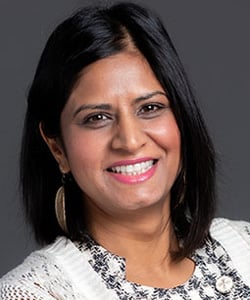 Vinita Singh, MD, MS, is an associate professor in the department of Anesthesiology at Emory University School of Medicine in Atlanta, GA, where she serves as division chief of Pain Medicine, director of Cancer Pain, and co-director of Pain Research. She also holds several national leadership roles within ASRA Pain Medicine, including founder and chair of the Collaboratory of Pain Chiefs and vice chair of the Ultrasound in Pain Medicine Special Interest Group. In 2025, Dr. Singh was named a Fellow of ASRA Pain Medicine, recognizing her significant contributions to the society and her continued dedication to advancing the field of pain medicine.
Geetha Thota, MD, a practicing anesthesiologist from All India Institute of Medical Sciences in New Delhi, India, interviewed Dr. Singh. The ASRA Pain Medicine Women in Pain Medicine Interview Series highlights the stories and insights of women shaping the future of the field.
Dr. Geetha Thota: What inspired you to choose a career in pain medicine?
Dr. Vinita Singh: My path to pain medicine evolved over time. I didn’t have a clear vision of what I wanted to pursue during medical school or even residency. What inspired me was my exposure to the pain clinic, where I watched patients experience dramatic improvements in their quality of life, sometimes on the very same day after a procedure. I, too, was drawn to the procedural aspect of the field, and the more I practiced pain medicine, the more I discovered how much I loved all parts of pain. I still find fulfillment in what I do.
Thota: You graduated from the Armed Forces Medical College in India, then completed residency at Indiana University and a Pain fellowship at Emory University. How has your career evolved over time, and what challenges did you face along the way?
Singh: One of my strengths throughout my journey has been persistence and hard work. Anesthesiology is a competitive specialty, and being a foreign medical graduate adds another layer of challenge. I was blessed to have outstanding mentors who supported me along the way. I took every opportunity that came my way and gave it my best. Challenges, in my view, are stepping stones; you learn from them and use those lessons to improve in the future. I also believe that mentors are more inclined to invest in someone who is motivated, proactive, and willing to go beyond what is asked. Now that I am also in a mentoring role, I can appreciate that perspective.
Thota: Were there any pivotal opportunities that significantly shaped your journey into pain medicine?
Singh: There were many. Like most medical students, I explored several specialties; I always thought about internal medicine, then oncology, and, at one point, surgery. An “aha” moment came during my surgery rotation. I noticed that when things were slow on the surgical side, I was always drawn to anesthesia. Being sort of an overachiever, I would assist with spinals and then scrub in for surgery. When I later completed an anesthesia externship in the U.S., I realized that anesthesia had been drawing me in for a long time. There is something magical about making surgery possible by ensuring a patient is completely comfortable. Pain medicine added another layer of meaning. I would get letters from patients sharing they’d achieved a bucket list item because we made a difference in their quality of life, for their pain was controlled. I keep those notes at my workstation. On difficult days, reading them instantly reminds me why I do what I do.
As for career pivot points, I have always been passionate about caring for cancer patients. After diving into the primary literature and identifying gaps, I considered dedicating my career to cancer pain research. Even though my career isn't quite as research-heavy right now, it's added to my lens the way I approach pain management. Now I mostly do clinical research, which has been wonderful. A more recent turning point was stepping into the role of division chief for the Emory Pain Division three and a half years ago. The administrative learning curve was steep, like drinking from a firehose, but it also gave me a new appreciation for how protected we are as academic clinicians and allowed me to grow as a leader.
Thota: Women remain underrepresented in pain medicine. What can be done to empower more women to enter the field?
Singh: Interestingly, I see more women in pain medicine in India than in the U.S. One important step is addressing unconscious bias. In leadership positions, when offering opportunities or feedback, it’s important to reflect whether the decision would be the same if the person were a different gender. It’s a similar process to avoiding bias when treating patients. Empowerment comes from equitable access to opportunities. In areas where women have historically had fewer opportunities, we may need to intentionally do more to achieve equity, while still ensuring that advancement is based on skill and merit.
Thota: Did you ever feel discouraged or face challenges as a female physician?
Singh: I’ve been very fortunate. One unique experience was having a baby during my fellowship. Before my baby was born, I made a study schedule with my co-fellows, which we later used for the fellows' curriculum. I didn't want to be seen as slacking or not performing up to par just because I was pregnant. My rotations were designed to be procedure-heavy, but I felt like I was missing out because I wasn't doing those procedures and had to make up fellowship time. I returned after just three weeks, and that period was challenging internally. My environment, though, was nothing but supportive, with mentors and faculty ensuring that I didn’t lose procedural exposure that I was worried about.
Thota: What advice would you give to young female physicians, and is there anything you would change about your career path?
Singh: I don't know if I would change a thing about my career. I’ve enjoyed every phase. Growth happens in many dimensions, academically, professionally, and personally. Over time, I’ve learned how much our responses to challenges shape our experiences. As a piece of advice, I would impart the philosophy of letting go and forgiveness to help you move forward lightly and with clarity. That mindset has made my journey fulfilling.