Interview with Dr. Kristen Noon
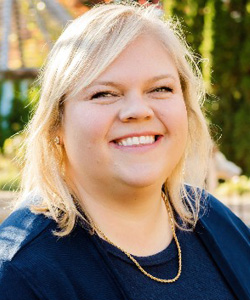
Dr. Kristen Noon is an associate professor of pain medicine in the department of Anesthesia at The Ohio State University in Columbus where she also serves as the pain medicine fellowship director. She is a member of the Association of Pain Program Directors Board of Directors. Dr. Noon is recognized nationally for her dedication to education, mentorship, and advancing the field of pain medicine.
Christine Gou, MD, a physical medicine & rehabilitation resident physician at Washington University School of Medicine in St. Louis, MO, recently interviewed Dr. Noon. Dr. Gou serves as co-chair of the Social Media and Website Subcommittee of ASRA Pain Medicine’s Resident & Fellow Committee and is passionate about fostering community in medicine. Through the ASRA Pain Medicine Women in Pain Medicine Interview Series, she highlights the stories and insights of women shaping the future of the field.
Dr. Christine Gou: What first drew you into pain medicine?
Dr. Kristen Noon: My first exposure to pain medicine came during my anesthesiology residency at Stanford University in my CA-1 or PGY-2 year on an acute pain rotation. I was fascinated that decisions in the operating room influenced patient outcomes. When I rotated on the chronic pain service the next year, caring for complex and interesting patients, I knew pain was the path I wanted to pursue. I cemented my love of the field during my fellowship at UC San Diego, training with fantastic physicians who taught us well, both technically and in how best to use them for each patient. Pain is a unique intersection of many interests I’ve always had, from pharmacology and physiology, working with my hands, the puzzle of localizing pathology, to the socioemotional dimensions. Doing rotations allowed me to uncover my multidisciplinary interests and see that I could integrate them into one practice. I appreciate how varied the work is: seeing patients in the clinic, performing procedures, and caring for hospitalized patients. There’s always something new, keeping the work interesting.
Gou: What has your career looked like? What are some of the most fulfilling aspects?
Noon: My career began primarily focused on clinical work at Ohio State. About three years in, I took on the role of associate program director for the pain fellowship, and after five years, I became the program director. Over time, education and training the next generation of pain medicine physicians has become one of my central passions. Teaching and mentorship keep the work fresh and engaging. Helping fellows grow into confident, thoughtful clinicians brings me a lot of joy.
Patient care is also never routine; there is something new or challenging to learn from each individual. Still, one of the most fulfilling aspects is helping people who have lived with chronic pain for years, sometimes after seeing many providers, and being the first to offer an intervention or approach that changes their lives. Watching patients regain function and enjoyment of their lives is powerful. With these moments every day, I feel fortunate to do this work.
Gou: What are the more difficult aspects of your work?
Noon: At Ohio State, I care for a large population of patients with low socioeconomic status, including many who rely on Medicaid or Medicare Advantage plans. One of the major challenges is navigating systemic barriers to care. Compared to patients with private insurance, those with public insurance face significantly more administrative hurdles, and providing consistent, timely treatment often requires learning to navigate these obstacles to keep care moving forward.
Working with underserved populations also presents challenges in building rapport and trust. Many of these patients have been marginalized for years; people haven’t listened to them, believed their pain, or taken the time to understand their experience. I consider one of the most important parts of my role to take that time, show them that I believe them, and make it clear that I am in their corner and advocating for them. That process can take longer, particularly when patients have never had that experience before, but over time, you see the benefits of the relationships built and the trust developed.
Gou: Advocacy is such a central part of our role as physicians. Outside of medicine, how do you like to spend your time?
Noon: I'm a mother of two young kids, so a lot of my time revolves around their activities. Right now, that’s swim lessons, soccer, baseball, and all the sports. I also love traveling, reading novels, hiking, and spending time outdoors. I try to cultivate a broad set of interests outside of medicine, because those things really fill your cup. They help you show up as your best self at work and ultimately make you happier and more fulfilled.
Gou: What strategies have helped you strike a balance between work and life?
Noon: Time management is incredibly important. Something as simple as using a shared Google calendar with your partner can make a big difference in staying organized. Building a strong community of family, friends, or other support people around is also important, especially when you need help filling in the gaps.
Another piece is being clear about what truly matters to you and prioritizing those things. I sometimes joke that it requires brutal prioritization. Ask yourself: What are the things I really want to accomplish? Then go after those intentionally. It’s easy to get caught up in obligations and say yes to everything, but that can pull you away from what’s most meaningful. Training can make this challenging because you’re often pulled in many directions and asked to do things you may not be as excited about. But those experiences can still be valuable. Giving a talk, joining a group, or participating in a community you’re curious about can open doors to networking and connection. Through that process, you start to find your niche, learn what matters to you, to eventually focus your energy on the things you want to continue growing long-term.
Gou: You gave a fantastic talk on the state of women’s representation in pain medicine at a recent ASRA Pain Medicine Meeting. Could you share some of those insights?
Noon: The gender imbalance in pain medicine is very noticeable. It remains one of the least gender-diverse specialties, where only about 18%-20% of pain physicians identify as women. That disparity becomes especially apparent at national meetings. This is unfortunate because women bring tremendous value to the field, including strong communication skills, empathy, and compassion, while also offering the same technical expertise and interventional skill set.
One thing that has made a meaningful difference for me has been mentorship. I’ve been fortunate to build relationships with outstanding women in pain medicine, including mentors like Dr. Meredith Barad and Dr. Lynn Kohan, who have helped guide and support me along the way.
Gou: Why do you think pain medicine has struggled with gender diversity, and what can we do to better support and recruit women?
Noon: One of the biggest concerns I hear from women considering pain medicine is radiation safety. Many are in their peak reproductive years, and the idea of working around fluoroscopy can be worrisome. You see similar concerns in other interventional fields, such as interventional cardiology and interventional radiology.
Addressing this starts with better education. When proper precautions are used, such as well-fitting lead, fetal dosimetry badges, and adherence to radiation safety protocols, the risks are very low. Just as important is having a supportive environment with colleagues who understand the physical demands of pregnancy and are willing to accommodate them. That education really needs to start early, ideally in medical school and certainly during residency, so trainees can see that pain medicine is a field they can pursue safely.
Gou: What else would you say to trainees today?
Noon: Probably that everything is going to be okay. Training is hard; the workload is heavy. Looking back 10 years, there is so much more to life and career beyond residency. So, identify what excites you early and lay the building blocks for the long-term career you want. I remember thinking during residency that if I didn’t find something I truly loved, I wouldn’t do a fellowship. When I discovered pain medicine, I had to consider another year as a trainee, but I’m so grateful I did. Immediate job opportunities can be tempting, but passion and long-term engagement matter since we practice for decades.
You’ve invested years of training, time, and financial resources into becoming a physician. Your career should continue to challenge and motivate you. Medicine is always evolving, and pain is no exception. So, ask yourself: Is this something I want to keep learning about throughout my career? If the answer is yes, it’s worth pursuing.
Another piece of advice is don’t be afraid to ask for mentorship. I was much more reserved and felt awkward. But what I’ve learned is that people in academia genuinely enjoy mentoring. I really love it when trainees reach out to hear about my experiences and learn from my path. Those conversations are meaningful on both sides, and mentorship relationships can shape careers, open doors, create opportunities, and help you find your place within the field. Even now, I continue to seek guidance from my mentors, with those relationships evolving over time.
Gou: Can you speak more to finding your place in the field and building a professional network?
Noon: Again, I never saw myself as someone who was naturally good at networking. For a long time, I assumed it just wasn’t one of my strengths. What I eventually realized, though, is that networking doesn’t have to be about forced conversations or self-promotion. It’s about showing up consistently. When you attend meetings regularly and stay engaged, people begin to recognize you. Casual interactions gradually turn into real connections. Being willing to collaborate, asking others if they’d like to work together on projects, and making yourself available to help all go a long way in building those relationships. And the work becomes more enjoyable. Many of the people I now collaborate with are friends, and I genuinely look forward to attending meetings because of those relationships.
Gou: What makes you the most proud of yourself?
Noon: That's a good question. Probably not something most people ever think about. I’d say I'm proud of my career and my personal life. It feels like an accomplishment that I have been able to be a caring, compassionate physician, a program director, and an advocate for education. At the same time, I’ve built my own robust life, where I can go home, spend time with my family, and enjoy life outside of work.