Journal Club Roundtable: Percutaneous Cryoneurolysis in the Perioperative Setting
Web Meeting
Papers for Discussion:
- Mihalko WM, Kerkhof AL, Ford MC, Crockarell JR Jr, Harkess JW, Guyton JL. Cryoneurolysis before total knee arthroplasty in patients with Severe osteoarthritis for reduction of postoperative pain and opioid use in a single-center randomized controlled trial. J Arthroplasty. 2021 May;36:1590-8. doi: 10.1016/j.arth.2020.11.013.
- Ilfeld BM, Finneran JJ, Swisher MW, et al. Preoperative ultrasound-guided percutaneous cryoneurolysis for the treatment of pain after mastectomy: a randomized, participant- and observer-masked, sham-controlled study. Anesthesiology. 2022 Nov 1;137(5):529-42. doi: 10.1097/ALN.0000000000004334.
Finneran JJ 4th, Kobayashi L, Costantini TW, et al. Ultrasound-guided percutaneous cryoneurolysis for the treatment of pain after traumatic rib fracture: a randomized, active-controlled, participant- and observer-masked study. Anesthesiology. 2025 Mar 1;142(3):532-45. doi: 10.1097/ALN.0000000000005328.
Moderator and Presenters:
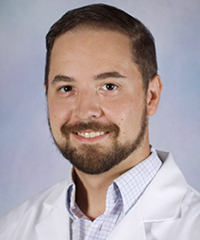 Che Solla, MD, MBA, is an anesthesiologist and interventional pain specialist and associate professor of anesthesiology at the University of Tennessee-Knoxville Graduate School of Medicine. A native of Knoxville, Dr. Solla's clinical practice includes perioperative anesthesiology as well as acute and chronic pain management. He completed undergraduate and medical school at the University of Tennessee. Prior to returning to his alma mater, Dr. Solla served for 8 years in the U.S. Army Medical Corps, deploying to Iraq in 2017.

Robert Gassert, MD, is an assistant professor in the division of regional anesthesiology in the department of anesthesiology at the University of Tennessee Health Science Center College of Medicine-Knoxville. He obtained his MD from Medical College of Georgia and completed his residency and fellowship in regional anesthesiology and acute pain at the University of Tennessee Graduate School of Medicine. He is a diplomate of the American Board of Anesthesiology and a member of the American Society of Anesthesiologists and ASRA Pain Medicine.
 John Madigan, MD, is a regional anesthesia and acute pain medicine fellow in the department of anesthesiology at the University of Tennessee Health Science Center College of Medicine-Knoxville in Knoxville, TN. He attended the State University of New York at Buffalo School of Medicine.
CME-CPD
Target audience
This roundtable is designed for the clinician learner in the specialties of anesthesia, acute and chronic pain management wanting to gain knowledge in the area of cyoneurolysis in the perioperative setting.
Objectives
- Describe the mechanism of action and neurophysiologic effects of percutaneous cryoneurolysis in the perioperative setting, including expected sensory and motor effects and the timeline of nerve recovery.
- Evaluate the available clinical evidence for the use of percutaneous cryoneurolysis for perioperative analgesia, including efficacy, duration of analgesia, functional outcomes, and opioid-sparing effects compared with established regional anesthesia techniques.
- Incorporate patient selection and procedural considerations for percutaneous cryoneurolysis into perioperative practice, including indications, ultrasound-guided technique, safety considerations, contraindications, and potential complications.
- Assess the role of percutaneous cryoneurolysis within multimodal and enhanced recovery pathways, including implications for postoperative follow-up, patient counseling, functional recovery, and health system value.
Accreditation and credit designation statements
Total Credits: 1.00
- Physicians: The American Society of Regional Anesthesia and Pain Medicine is accredited by the Accreditation Council for Continuing Medical Education (ACCME) to provide continuing medical education for physicians.
The American Society of Regional Anesthesia and Pain Medicine designates this internet live activity for a maximum of 1.00 AMA PRA Category 1 Credits™. Physicians should claim only the credit commensurate with the extent of their participation in the activity.
- PAs (Physicians Assistants): AAPA accepts certificates of participation for educational activities certified for AMA PRA Category 1 Credit™ from organizations accredited by ACCME or a recognized state medical society. Physician assistants may receive a maximum of 1.00 hours of Category 1 credit for completing this program.
- Nurse Practitioners: The American Association of Nurse Practitioners (AANP) accepts AMA PRA Category 1 Credits™ from organizations accredited by the ACCME. This activity has been approved for a maximum of 1.00 AMA PRA Category 1 Credits.™
- Registered Nurses: Regulations dictate that only physicians may earn CME credits, however, many state Boards of Registered Nursing accept AMA PRA Category 1 Credits™ from organizations accredited by the ACCME. Attendees are responsible for confirming their specific board’s acceptance of ASRA-provided credits. This activity has been approved for a maximum of 1.00 AMA PRA Category 1 Credits.™
No industry support has been received for this educational activity.
Click here to view all faculty disclosure. In accordance with the ACCME’s Standards for Integrity and Independence in Accredited Continuing Education and related policies, ASRA Pain Medicine is committed to ensuring balance, independence, objectivity, and scientific rigor in its CME/CPD activities. Those in control of the educational content disclose all relevant relationships (financial or other) with any commercial interest that they have had within the past 24 months. If an individual refuses to disclose, they are disqualified from participating. Disclosure information is evaluated and conflicts of interest mitigated. Disclosure is made to participants prior to the activity. Participants are asked to evaluate the objectivity and independence. Off-label or investigational use of a therapeutic product is also disclosed.